American Acorns
William Banton Clarkson in the cotton trade, 1895 to 1916
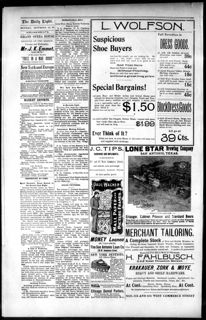
In September 1895 a San Antonio newspaper headlined a federal lawsuit "Sensational Suit." The United States had sued the firm of J. L. Slayden, W. B. Clarkson and W. C. Robards for violating the federal law barring employers from importing foreign laborers under contract.
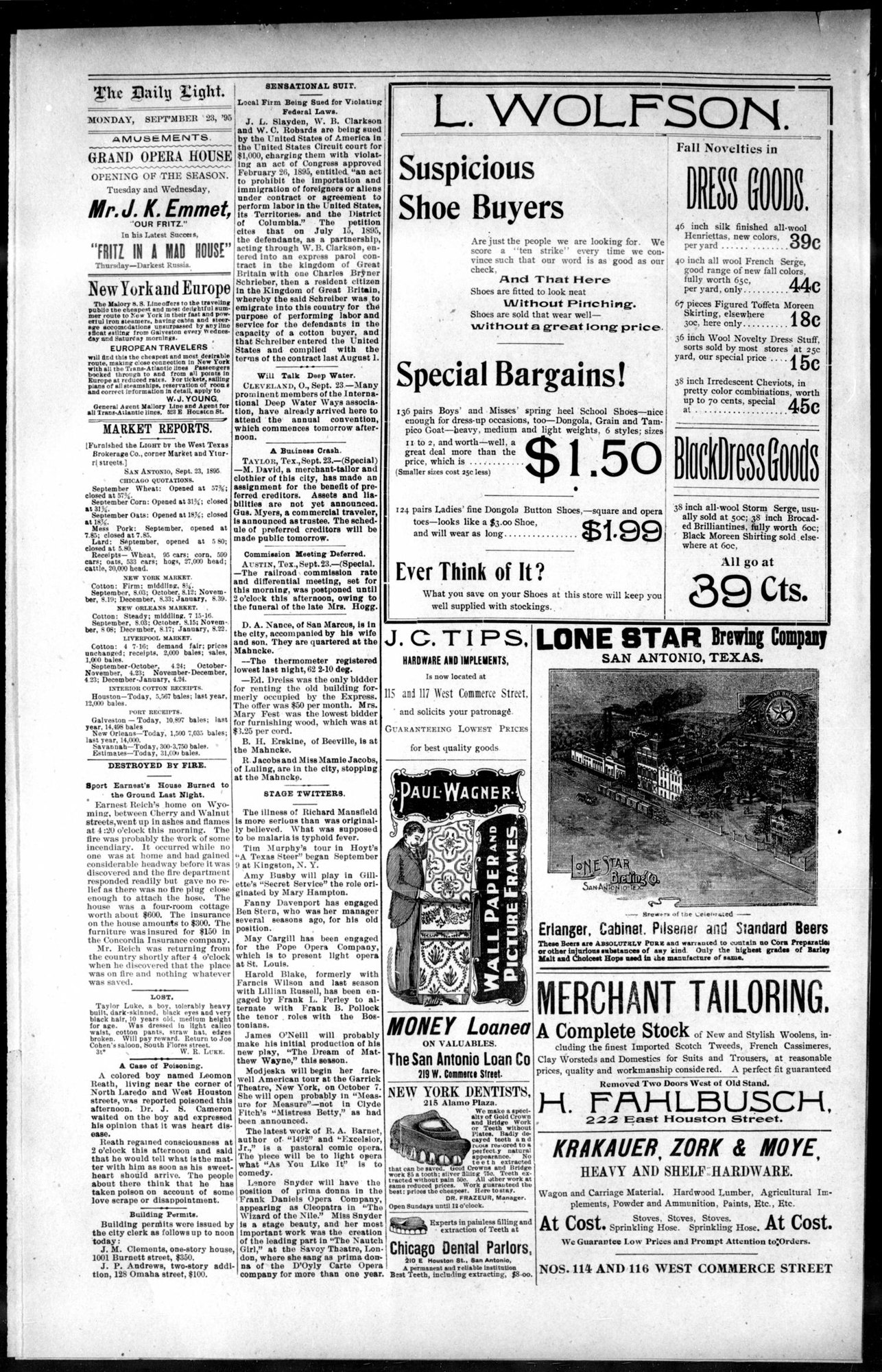
Source: The Portal to Texas History, University of North Texas Libraries (digitized newspaper), https://texashistory.unt.edu/ark:/67531/metapth1683372/m1/8/.
How it is shown: Complete image as saved; no crop, no retouch, no search highlight.
Keep in mind: Opening lines taken from the library's text index; the rest not re-read.
Image details
Sued over a cotton buyer from Great Britain, 1895
According to the newspaper, the petition alleged that on July 15, 1895, the partners, acting through William Banton Clarkson, had made an oral contract in the Kingdom of Great Britain with Charles Bryner Schrieber, then living there, for Schrieber to come to the United States and work for the firm as a cotton buyer; that Schrieber crossed the Atlantic and began work on August 1; and that this violated "the act of February 26, 1895," as the newspaper dates the statute. The Alien Contract Labor Law was enacted on February 26, 1885 (23 Stat. 332, per a Treasury Department letter of July 16, 1888); the newspaper's 1895 is probably a misprint. The government asked a $1,000 penalty. How the case ended is not known.
A partnership's assets and debts, 1896
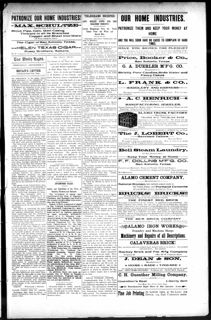
A year later, Slayden, Clarkson and Robards filed an inventory of the firm's assets and liabilities with the county clerk. The firm's holdings, stock in the Yoakum Improvement Company and the Standard Compress Company, real estate at Yoakum and San Antonio, and open accounts, came to $199,648.29. The three partners' personal holdings were added beside it: Slayden's $48,010, Clarkson's $52,851 in stock across five compress and real-estate companies, and Robards's $140,901.94, which also listed a Jersey bull, a billiard table, two horses and a buggy. The newspaper gave the combined total as $439,901.94, against total indebtedness of $250,300.79.
The four component figures add up to $441,411.23, $1,509.29 more than the newspaper's stated total. The notice adds that the firm had open accounts, the amounts not yet given, due to firms in Russia, Spain, Germany, England and New York.
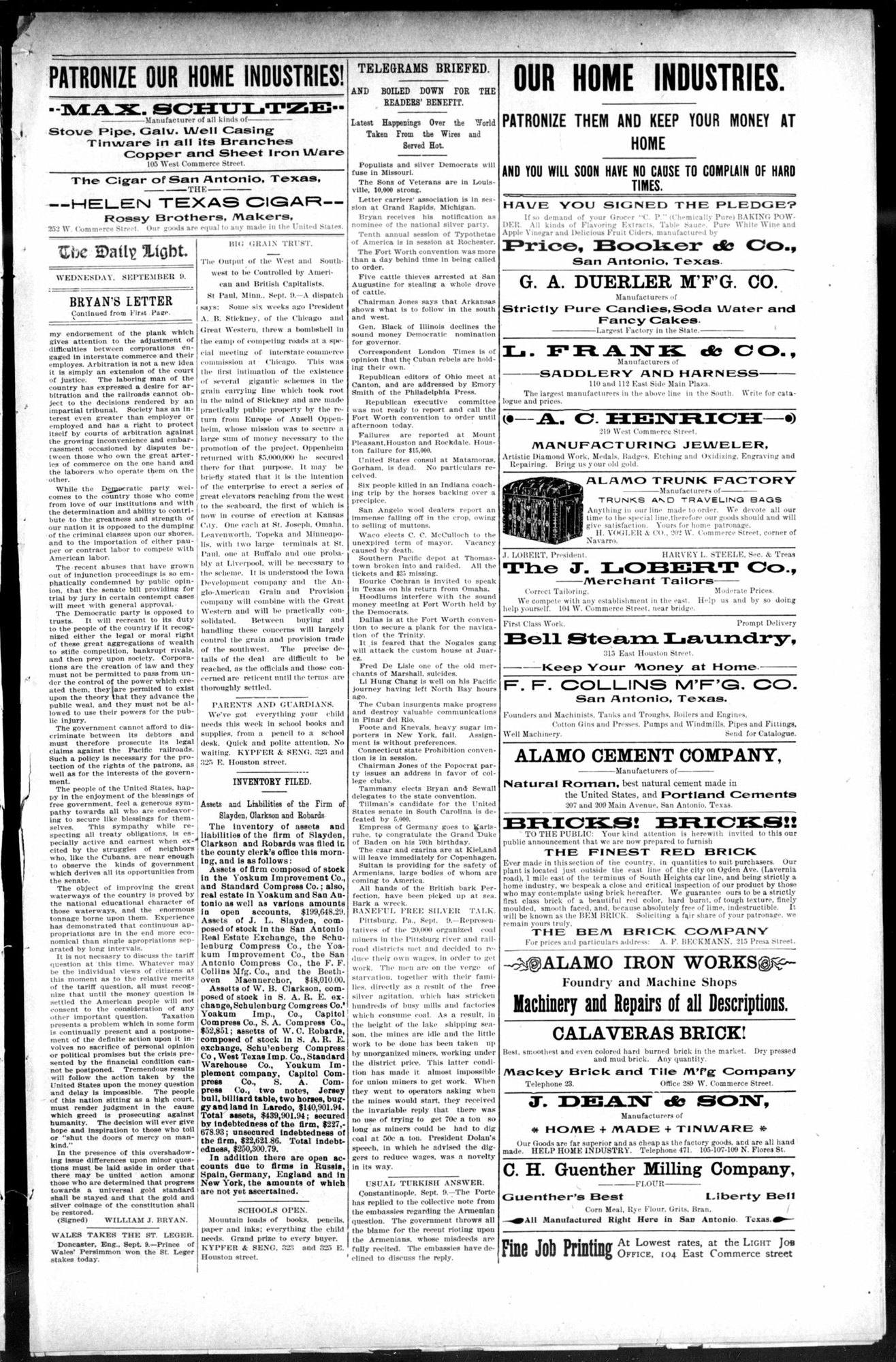
Source: The Portal to Texas History, University of North Texas Libraries (digitized newspaper), https://texashistory.unt.edu/ark:/67531/metapth1683941/m1/5/.
How it is shown: Complete image as saved; no crop, no retouch, no search highlight.
Keep in mind: Slayden and Clarkson together is in the library's text index; the article has not been independently checked.
Image details
Yoakum Improvement Company, 1899
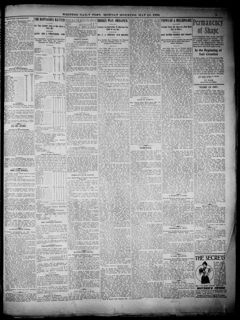
The Houston Daily Post of May 15, 1899 reported a slate of directors elected at the Yoakum Improvement Company, naming a "W. B. Clarkson, Houston" among them, with a "T. H. Clarkson" also appearing in the same list. W. B. Clarkson was probably William Banton; the report does not say how the two Clarksons were related.
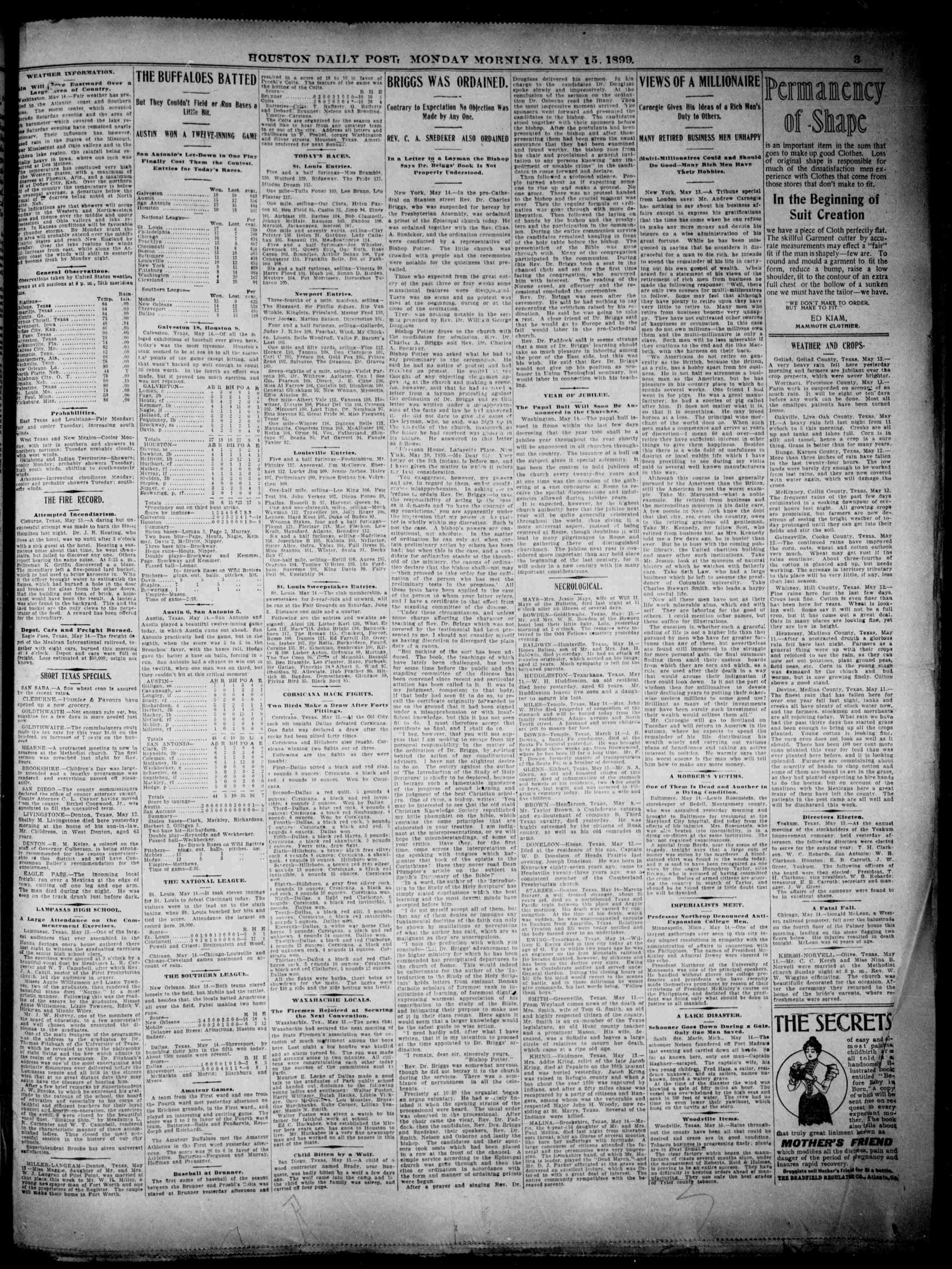
Source: Library of Congress, Chronicling America (public-domain page PDF), LCCN sn86071197.
How it is shown: Complete page as supplied; no crop, no retouch, no search highlight.
Keep in mind: Name taken from the library's text index, not checked line by line on the image; the page image is incomplete at the edges. Identity as William Banton Clarkson is the research source's reading.
Image details
Bankruptcy, 1904
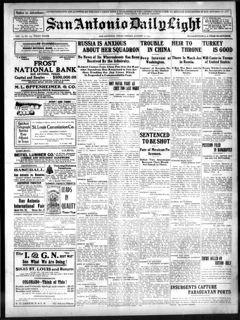
Newspaper reports in August 1904 described the failure of another Clarkson partnership. William Banton Clarkson, Edward Moritz Goldstein and a man named Henry Clarkson, composing "Clarkson & Co., cotton buyers," filed a voluntary petition in bankruptcy in the federal district court, and Clarkson separately asked relief from the liabilities of the former firm, Slayden, Clarkson & Robards. The reports gave the new firm's liabilities as $174,599.56, against assets reported at $50,709.95, and Clarkson's request for relief covered $166,667.97 of the old firm's debts, a separate figure. Creditors were described as mostly residents of foreign countries. The article does not say who Henry Clarkson was.
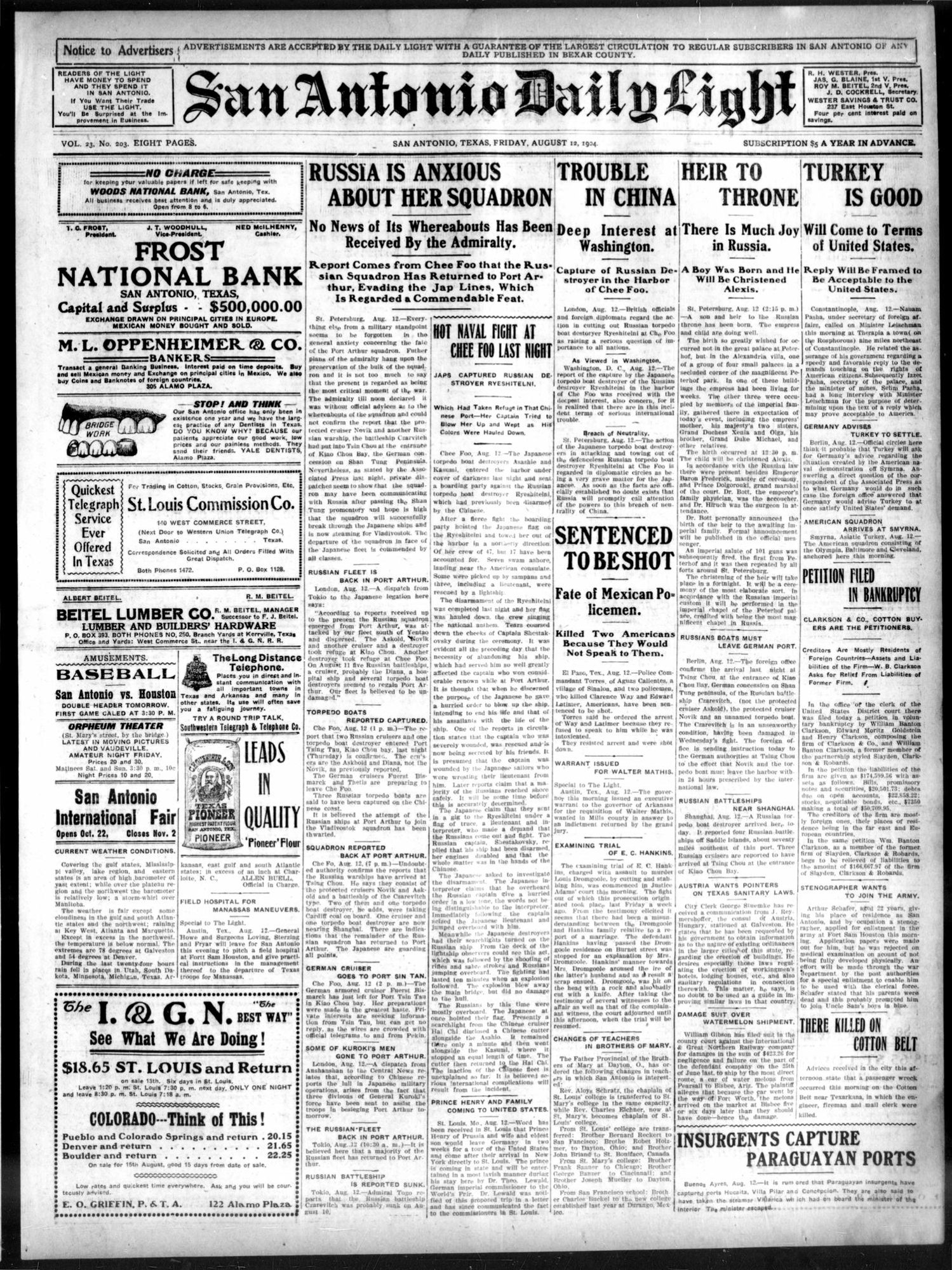
Source: The Portal to Texas History, University of North Texas Libraries (digitized newspaper), https://texashistory.unt.edu/ark:/67531/metapth1686747/m1/1/.
How it is shown: Complete image as saved; no crop, no retouch, no search highlight.
Keep in mind: The names on the page is in the library's text index; the article has not been independently checked.
Image details
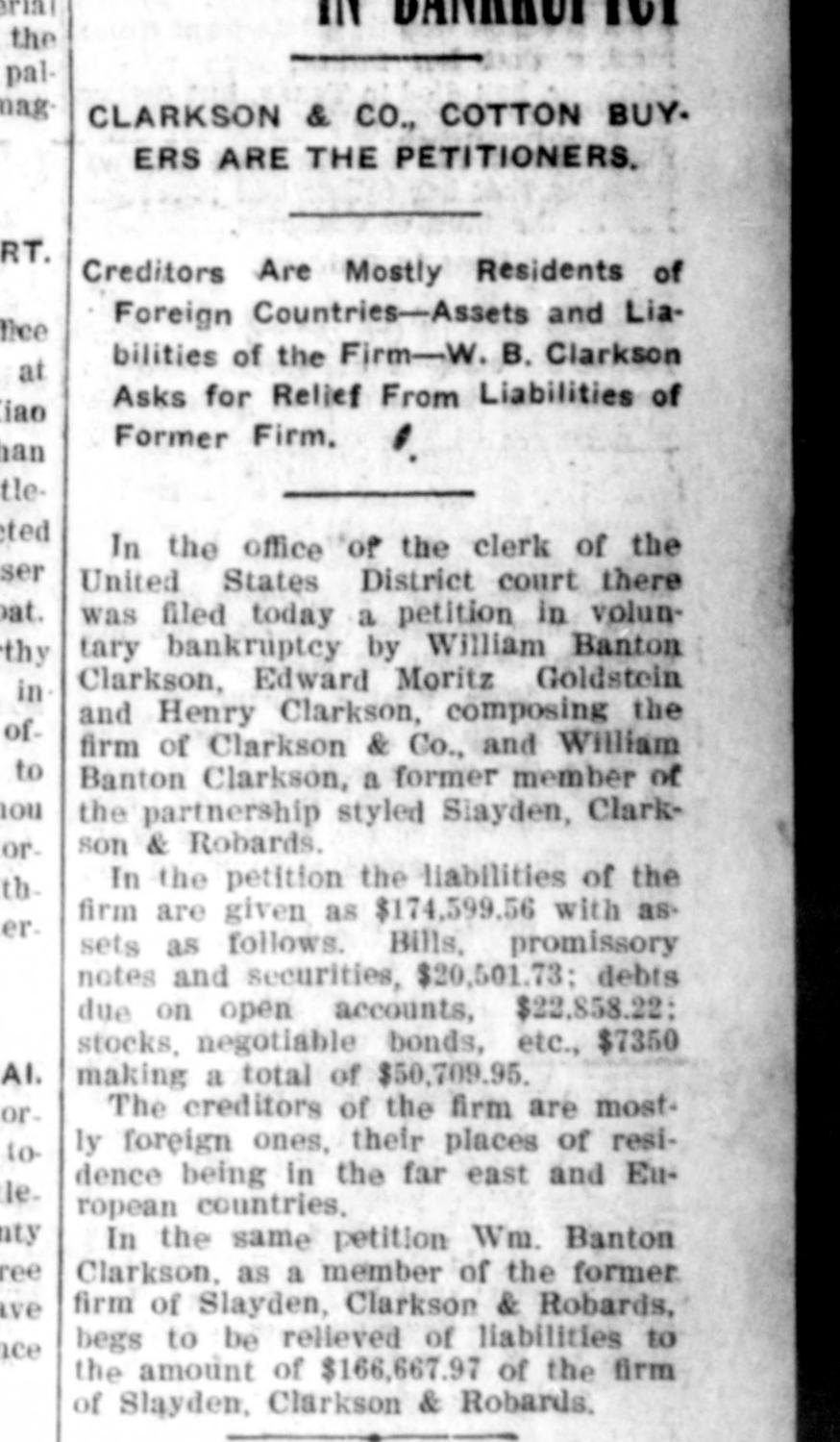
Source: Library of Congress, Chronicling America (public-domain page image)
How it is shown: Article crop as saved; no retouch.
Keep in mind: Confirmed as the printed report (William Banton Clarkson named in the petition). Business detail only; no cause is stated beyond the printed liabilities.
Image details
The Cotton Exchange, 1908
The San Antonio Gazette of June 12, 1908 reported the San Antonio Cotton Exchange's annual election: "President, W. B. Clarkson; vice president, A. Cohen." The initials, location and known cotton business make William Banton the probable president. If so, four years after the bankruptcy he was still active enough in the city's cotton trade to head its exchange.
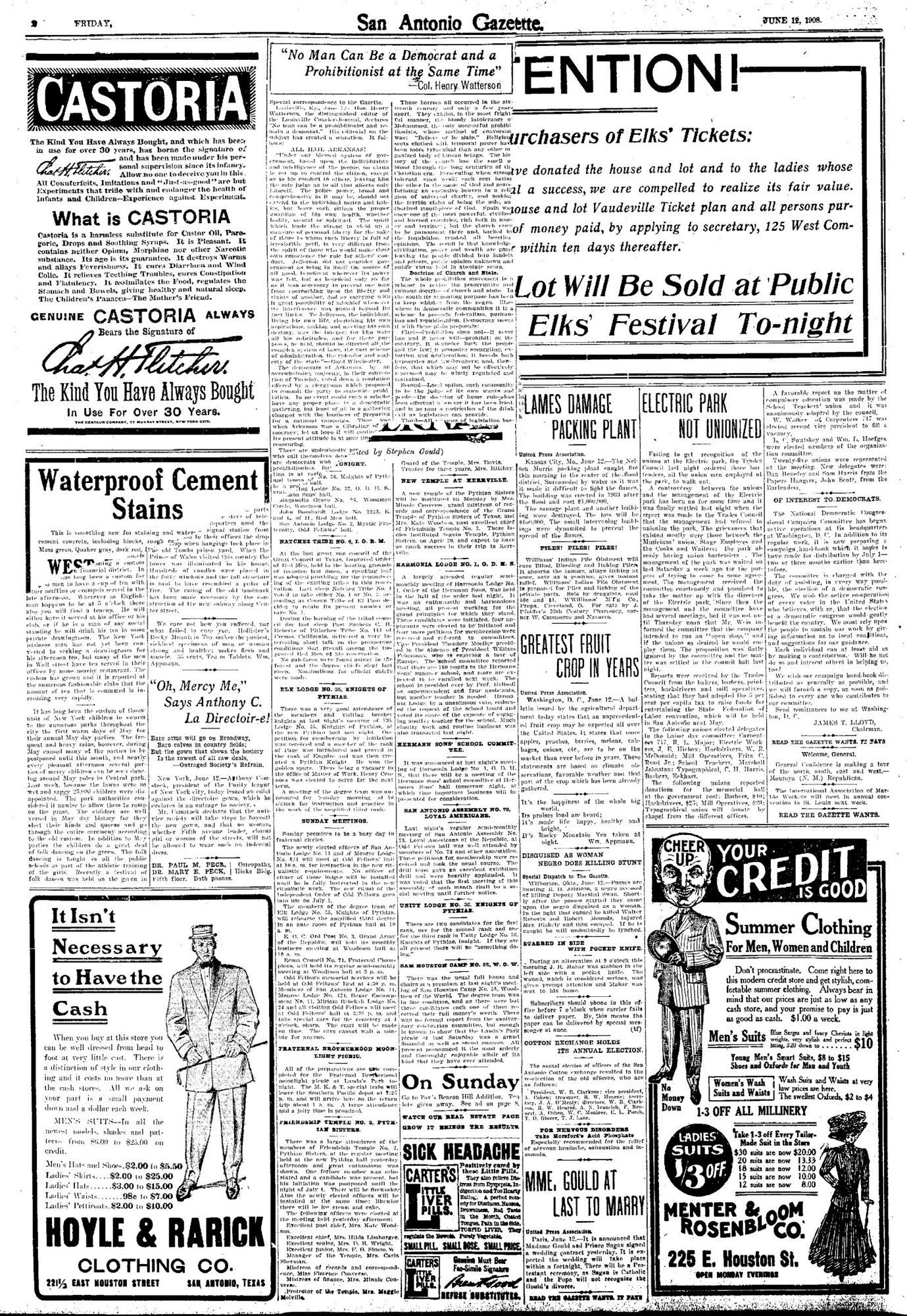
Source: The San Antonio Gazette, 12 June 1908 (page image via NewspaperArchive).
How it is shown: Complete page as supplied; no crop, no retouch, no search highlight.
Keep in mind: Confirmed as printed; initials and local cotton-trade context identify W. B. Clarkson as William Banton Clarkson (Likely).
Image details
A circle of Clarksons, 1911
A newspaper account of a 1911 farewell dinner for a retired army general at the Menger Hotel names "W. B. Clarkson" among the hosts, alongside "J. M. Clarkson." The first was probably William Banton; the item does not say who J. M. Clarkson was.
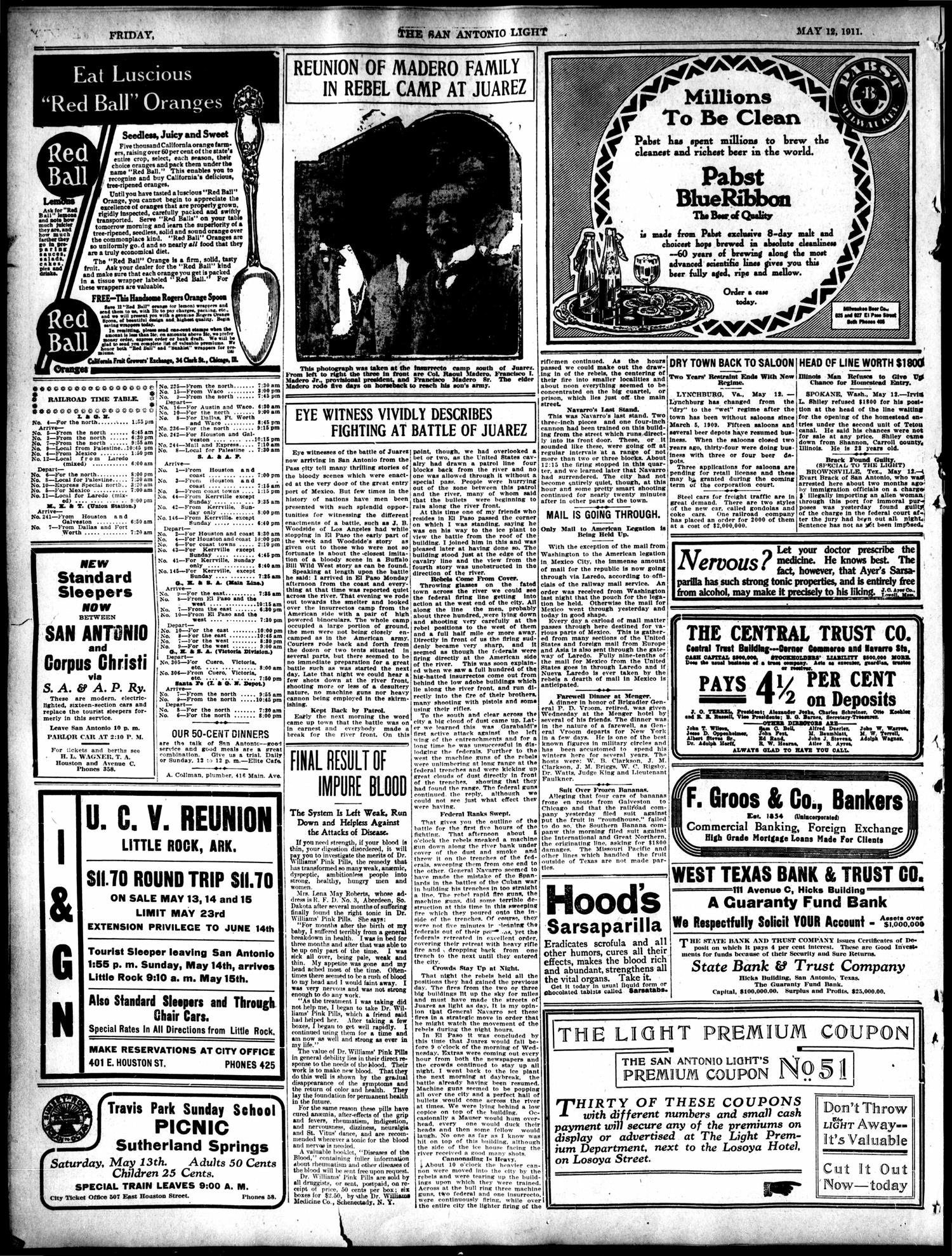
Source: The Portal to Texas History, University of North Texas Libraries (digitized newspaper), https://texashistory.unt.edu/ark:/67531/metapth1692929/m1/16/.
How it is shown: Complete image as saved; no crop, no retouch, no search highlight.
Keep in mind: Clarkson on the page is in the library's text index; the article has not been independently checked.
Image details
A second bankruptcy, 1912
In January 1912 the federal district court again had a Clarkson bankruptcy before it: "Thomas H. Clarkson & Co.," made up of Thomas H. Clarkson, William Banton Clarkson and Edward Moritz Goldstein, the same Goldstein named in the 1904 filing. The firm's debts were given as $44,317 against assets of only $3,292; William Banton Clarkson's personal property was separately valued at $2,000.
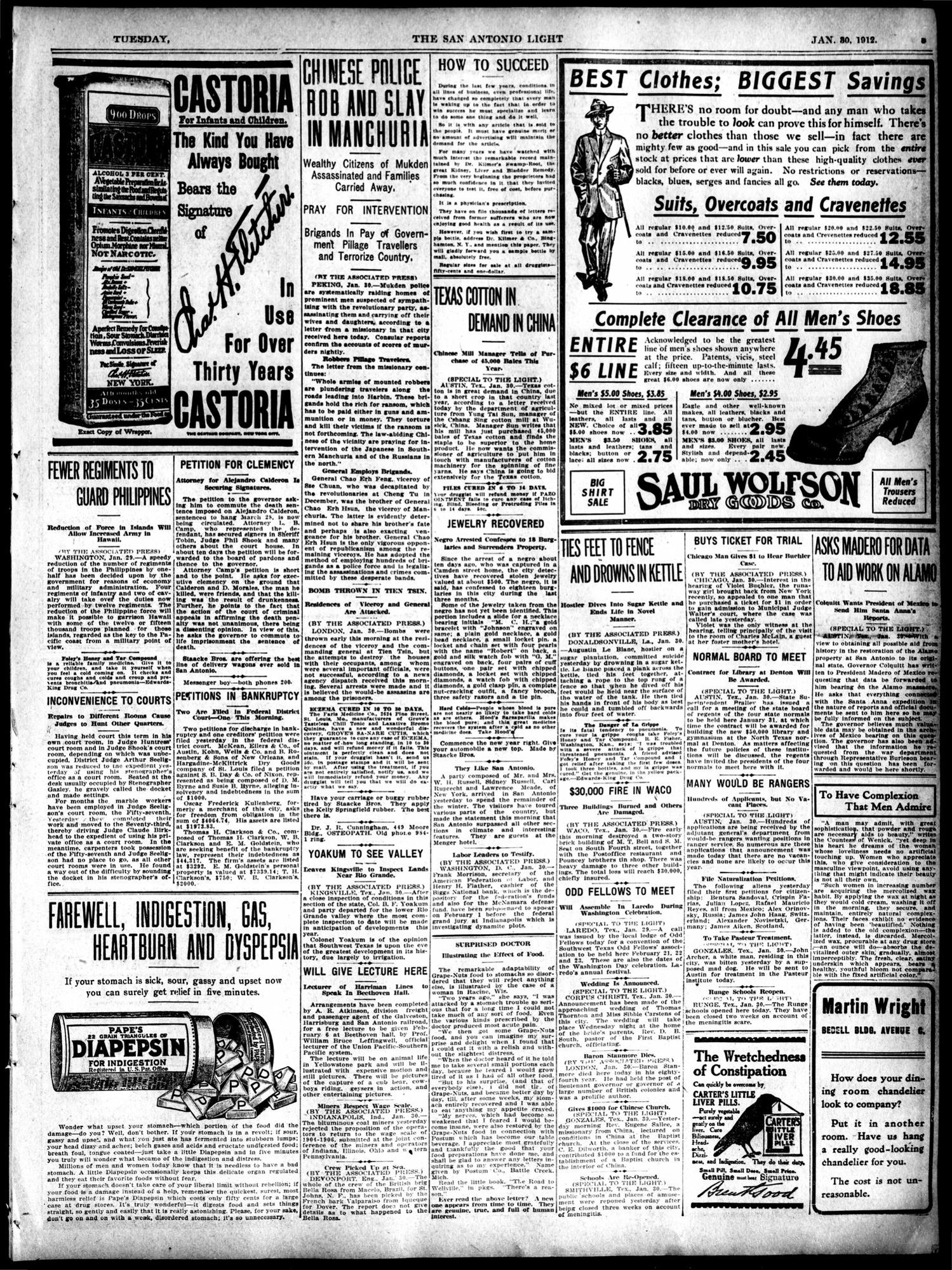
Source: The Portal to Texas History, University of North Texas Libraries (digitized newspaper), https://texashistory.unt.edu/ark:/67531/metapth1693189/m1/3/.
How it is shown: Complete image as saved; no crop, no retouch, no search highlight.
Keep in mind: Clarkson on the page is in the library's text index; the article has not been independently checked.
Image details
The article does not say who Thomas H. Clarkson was to William Banton. Half a century earlier, the 1861 England census, taken at Liverpool (schedule 37, address 171 Islington, page 9, folio 97), records a household headed by William Clarkson, 30, and his wife "Emma L.," 25, with three young sons, all born at Liverpool: "Geo. R.," five; "William B.," two; and "Thomas H.," one. The abbreviated names probably stand for Emma Lucy, George, William Banton and Thomas Henry, though the census page does not spell them out.
A Bexar County declaration of intent sworn May 10, 1900 places a Thomas Henry Clarkson, British subject, born about 1860, who arrived in New York in 1891. He was probably the brother recorded as an infant in 1861. Whether he was also the "Thomas H." of 1912, the "Henry" of 1904 or the "T. H." of 1899 is not known, and none of the newspaper accounts says whether the "J. M. Clarkson" of 1911 was any of them.
A 1916 cotton forecast
The San Antonio Light of August 15, 1916, in a front-page item headlined "Mean Business Boom," attributes to "the prediction of W. B. Clarkson, president of the Clarkson Cotton Company," that Texas cotton would bring as much as 20 cents a pound. As with the 1908 item, the initials, location and business make William Banton the probable speaker. He was still in the cotton trade more than a decade after the first bankruptcy.
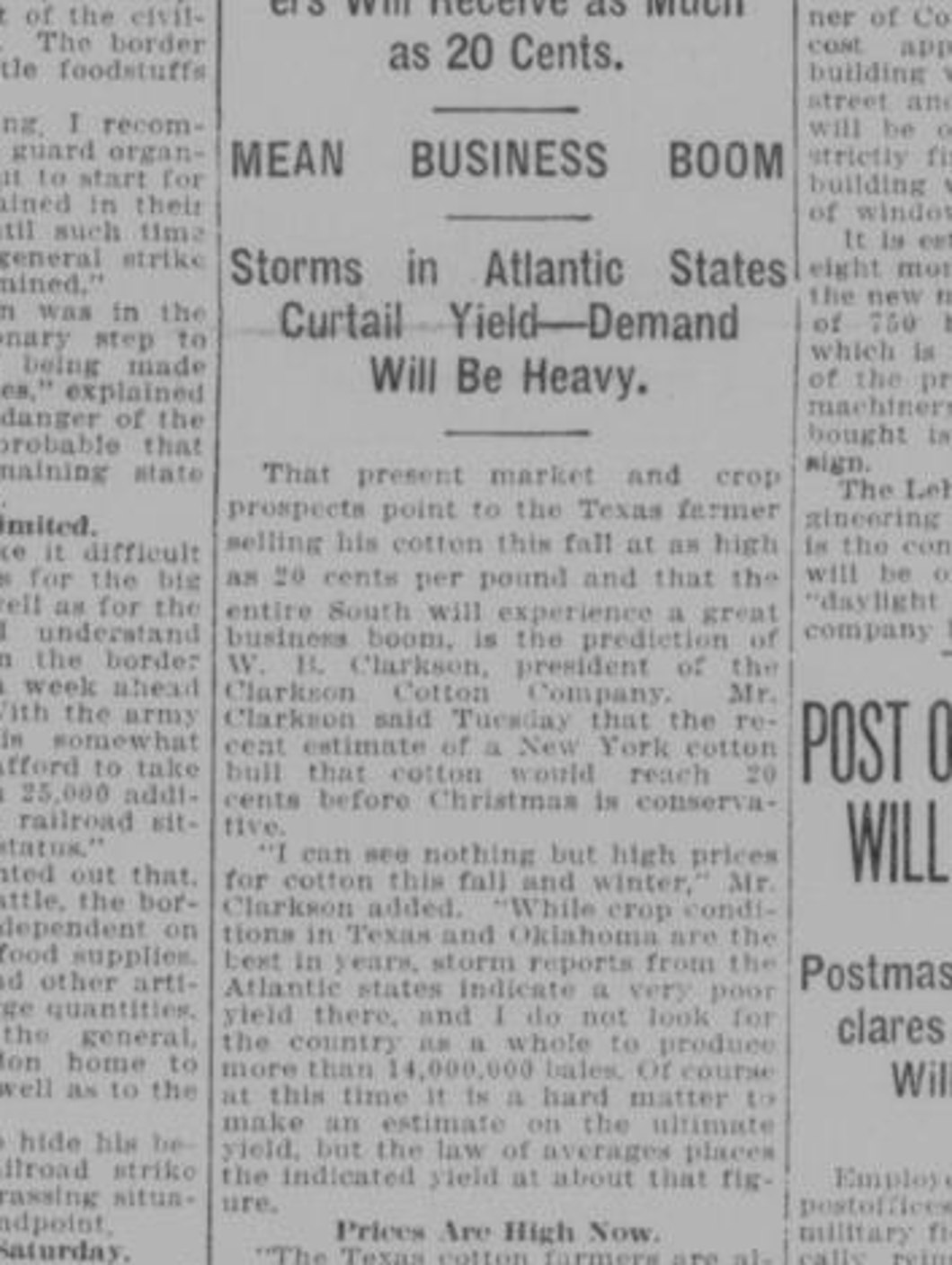
Source: The San Antonio Light, via NewspaperArchive
How it is shown: Complete, unchanged crop as held; no further crop or retouch.
Image details
What we're still looking for
We have not found how the 1895 suit over Charles Bryner Schrieber ended, or what became of Clarkson & Co. and Thomas H. Clarkson & Co. after their bankruptcies. Who T. H. Clarkson (1899), Henry Clarkson (1904) and J. M. Clarkson (1911) were, and whether any of them is Thomas Henry Clarkson or some other relative entirely, is not known. The $1,509.29 gap between the 1896 inventory's four component figures and its stated total is also unexplained.
Sources
- San Antonio Daily Light, September 23, 1895, p. 8, "Sensational Suit." texashistory.unt.edu/ark:/67531/metapth1683372/m1/8/
- San Antonio Daily Light, September 9, 1896, p. 5, "Inventory Filed." texashistory.unt.edu/ark:/67531/metapth1683941/m1/5/
- The Houston Daily Post, May 15, 1899, p. 3, directors elected at the Yoakum Improvement Company. www.loc.gov/resource/sn86071197/1899-05-15/ed-1/?sp=3
- San Antonio Daily Light, August 12, 1904, p. 1, "Petition Filed In Bankruptcy." texashistory.unt.edu/ark:/67531/metapth1686747/m1/1/
- The San Antonio Gazette, June 12, 1908, p. 2, Cotton Exchange annual election.
- San Antonio Light, May 12, 1911, p. 16, "Farewell Dinner at Menger." texashistory.unt.edu/ark:/67531/metapth1692929/m1/16/
- San Antonio Light, January 30, 1912, p. 3, "Petitions In Bankruptcy." texashistory.unt.edu/ark:/67531/metapth1693189/m1/3/
- "Mean Business Boom," The San Antonio Light, August 15, 1916, p. 1 (NewspaperArchive).
- 1861 England census, RG9/2696, folio 97, page 9, schedule 37, 171 Islington, Liverpool: household of William Clarkson, "Emma L." and sons "Geo. R.," "William B." and "Thomas H." (image on this site).
- Bexar County, Texas, declaration of intent of Thomas Henry Clarkson, sworn May 10, 1900 (no. F-1176), via Ancestry (Declarations of Intent, 1840-1906).
- U.S. House Executive Document 396, 50th Congress, 1st session, p. 1 (Treasury Department letter of July 16, 1888, dating the Alien Contract Labor Law's enactment to February 26, 1885, 23 Stat. 332). www.govinfo.gov/content/pkg/SERIALSET-02561_00_00-114-0396-0000/pdf/SERIALSET-02561_00_00-114-0396-0000.pdf
William Banton Clarkson's profile tells the rest of his life.