 American Acorns
Ex glande quercus magna crescit: from the acorn the mighty oak grows.
This is a history of the Oak family and some of the families joined to it. It begins with Nathaniel Oak(e), who first appears in the records at Marlborough, Massachusetts, in 1686, and with the story his descendants told about how he got there: a cabin boy, a shipwreck, and a wildcat killed with a pine knot.
The stories distinguish documented facts from family tradition and link to their sources.
Read the storiesExplore the family tree
Or start with a name or branch on the People page, or see where our ancestors lived on a map.

Start here
- Read the storiesFamily history told with its evidence, from the 1600s to today.
- Find your line in the treeSearch the family tree and follow your own branch, ancestors or descendants.
- Send us what you havePapers, photographs, a family tree or a correction. Family sign-in required.
Start with a story
 The Oak men who served, from Marlborough's garrisons to the Cold WarAbout 1755From the Lexington alarm of 1775 to a missile crew in 1977: the Oak men who served, and the men of the families they married into.
 The Clarksons who served, from a Fairfield militia in 1657 to World War IIThe 1650sFrom a Fairfield militia lieutenant in 1657 to World War II: the Clarksons who served, with the Ligon and Nash men beside them.
 Politics and religion on the Oak lineAbout 1688Town offices, pension petitions, an anti-slavery legislator and three centuries of church membership on the Oak side.
 Politics and religion on the Clarkson lineAbout 1827A district judge, a Senate-confirmed postmaster, two generals and a run of Liverpool parish registers reaching into San Antonio's Episcopal churches, on the Clarkson side.
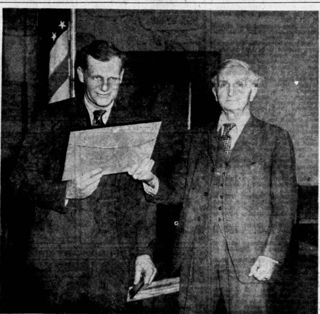 Irving Oak's rescue of a fellow linemanAbout 1942In 1942, Irving Oak received the National Safety Council's President's Medal for helping a fellow Central Maine Power lineman after an electrical accident in Skowhegan. In 1925, he had helped pull two people from a submerged car.
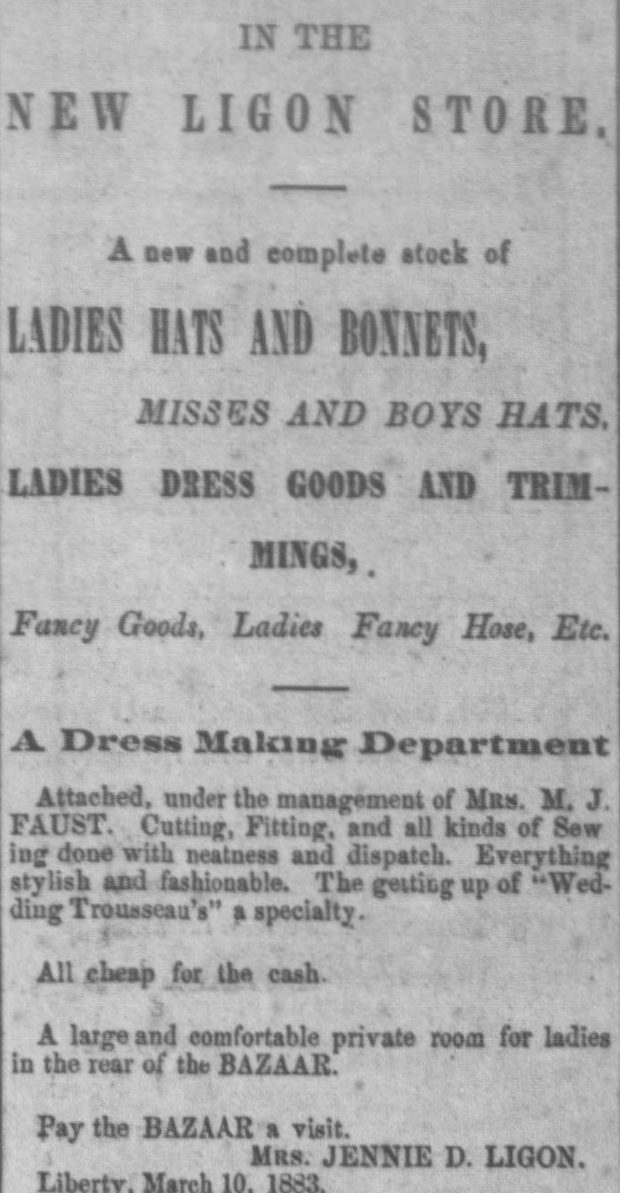 Jennie Ligon: from the Ladies Bazaar to the Gloster post officeThe 1890sJennie Ligon sold hats, bonnets, and dress goods before becoming postmaster of Gloster, Mississippi, in 1898. She held the office for fifteen years, as its staff and rural delivery service grew.
 John Oaks of Exeter: a soldier's widow has to prove a marriageAbout 1843John Oaks served three enlistments in the Revolution and drew an $8 pension at Bangor. When he died at Exeter, Maine in June 1842, his widow had to prove a Thanksgiving-day wedding of 1783 that left no record. A woman who called him her brother swore to it; the claim was rejected.
 William Oake and the fire at ShrewsburyAbout 1723On the night of August 7-8, 1723, the new house of Captain John Keyes at Shrewsbury burned with five people in it, among them an eighteen-year-old apprentice named William Oakes who may have been a son of Nathaniel Oak of Westborough. The newspaper account, a diary entry and a printed genealogy tell it; only the carpenter escaped.
 Nathaniel Oak and the cabin-boy storyAbout 1680A family account tells of a shipwrecked cabin boy, a catamount bounty, and sheep bought with the reward. Nathaniel Oak's life as a Massachusetts farmer is better documented than the story of how he arrived.
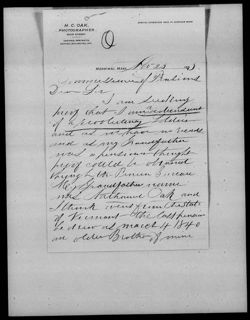 Joseph Oak asks the Pension Office about his grandfather, 1895About 1895In November 1895 Joseph Oak of Merrimac wrote to the Pension Office on a photographer's letterhead, hoping to prove his grandfather Nathaniel Oak had fought in the Revolution. He thought he had been a captain, and that he would have been 133.
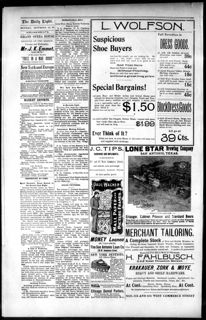 William Banton Clarkson in the cotton trade, 1895 to 1916About 1895A federal suit over a cotton buyer recruited from Great Britain in 1895, a reported $439,901.94 partnership inventory in 1896, and two bankruptcies, in 1904 and 1912: the paper trail of William Banton Clarkson's business, and three same-surname men it does not identify.
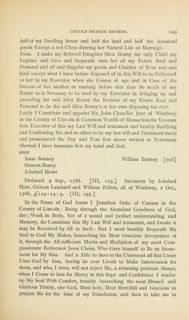 Captain Jonathan Oaks: a carpenter from Marlborough to the KennebecAbout 1784Jonathan Oaks, probably the son of Nathaniel born at Marlborough in 1717, was a carpenter in Stow and Harvard and a "Capt." in the church records before he moved to Canaan on the Kennebec in 1772. His 1784 will names sixteen children and leaves his eldest son ten shillings "if he Ever Comes to this place again."
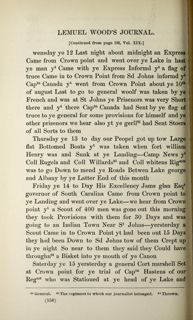 Captain Benjamin Hastings of BoltonAbout 1759Captain Benjamin Hastings of Bolton was dismissed with disgrace at Crown Point in 1759 and led a company to Cambridge in 1775, with Nathaniel Oakes on its roll. The span 1702 to 1756 attached to him joins two men.
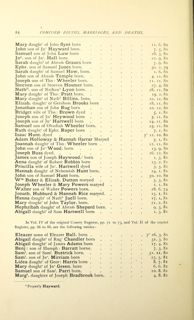 Mary Holloway: three marriages and a working widowThe 1720sMary Holloway was born at Concord in 1681/2, married Nathaniel Oake in 1703, Thomas Rice Jr. in 1722 and Deacon John Fay in 1744, and in 1749 was nursing in the Westborough minister's house. Town records and Ebenezer Parkman's diary trace her; her death has not been found.
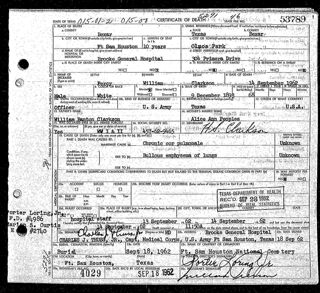 Percy W. Clarkson: from a Houston household to major generalThe 1940sPercy Clarkson rose to major general. The Army Register documents his promotions; later accounts describe his service in France, the Philippines and the Pacific.
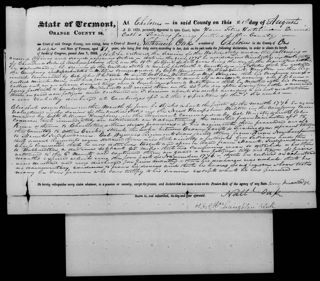 Captain Nathaniel Oak of Chelsea, VermontAbout 1794In 1794 Chelsea, Vermont, paid Capt. Nathaniel Oak in wheat for building its pound, stocks and sign-post. A town history, a pension file and two town clerks' cards follow him from Winchester, New Hampshire, through a second marriage, to Exeter, Maine, where he died in 1840.
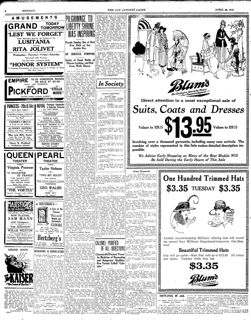 May Kelso and the Battle of Flowers, 1918About 1918In April 1918 San Antonio's Battle of Flowers Association, led by Mrs. Winchester Kelso, put a military and Red Cross parade and a service before the Alamo in the place of the flowers. The San Antonio Light credits her association with planning it and reports $802.23 in the Red Cross flags.
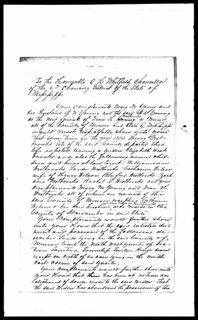 Mary Young asks the court to divide her father's land, 1871 to 1872About 1871In 1871 Mary Young and her husband asked a Mississippi chancery court to divide her late father's land, or sell it, and said her brother had worked it alone for ten years. His reply was a motion to dismiss; the papers end there, with no decree.
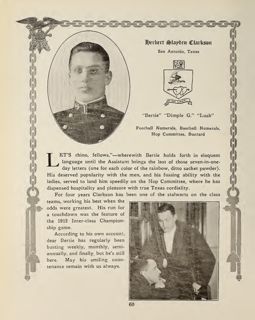 Herbert Clarkson and the report on Patton, 1943About 1943In September 1943 Eisenhower's inspector general looked into Patton's treatment of soldiers in Sicily. A historian names Colonel Herbert Slayden Clarkson as the officer and describes his report; the report itself, in an Abilene archive, has not been checked for this account.
Veterans of the family: both lines, on one page.
Find someone in the family tree, follow their ancestors or descendants, and download a branch as an image or PDF.
Evidence notes explain what the records establish and what remains uncertain. Family traditions and recollections are identified as such.