 American Acorns
Stories
No stories match. Try a surname alone, or search the people list.
 The Oak men who served, from Marlborough's garrisons to the Cold WarAbout 1755From the Lexington alarm of 1775 to a missile crew in 1977: the Oak men who served, and the men of the families they married into.
 The Clarksons who served, from a Fairfield militia in 1657 to World War IIThe 1650sFrom a Fairfield militia lieutenant in 1657 to World War II: the Clarksons who served, with the Ligon and Nash men beside them.
 Politics and religion on the Oak lineAbout 1688Town offices, pension petitions, an anti-slavery legislator and three centuries of church membership on the Oak side.
 Politics and religion on the Clarkson lineAbout 1827A district judge, a Senate-confirmed postmaster, two generals and a run of Liverpool parish registers reaching into San Antonio's Episcopal churches, on the Clarkson side.
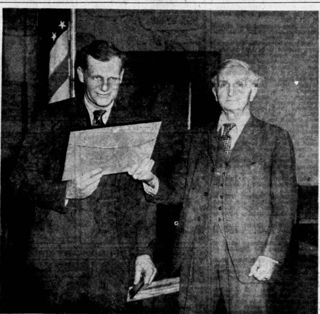 Irving Oak's rescue of a fellow linemanAbout 1942In 1942, Irving Oak received the National Safety Council's President's Medal for helping a fellow Central Maine Power lineman after an electrical accident in Skowhegan. In 1925, he had helped pull two people from a submerged car.
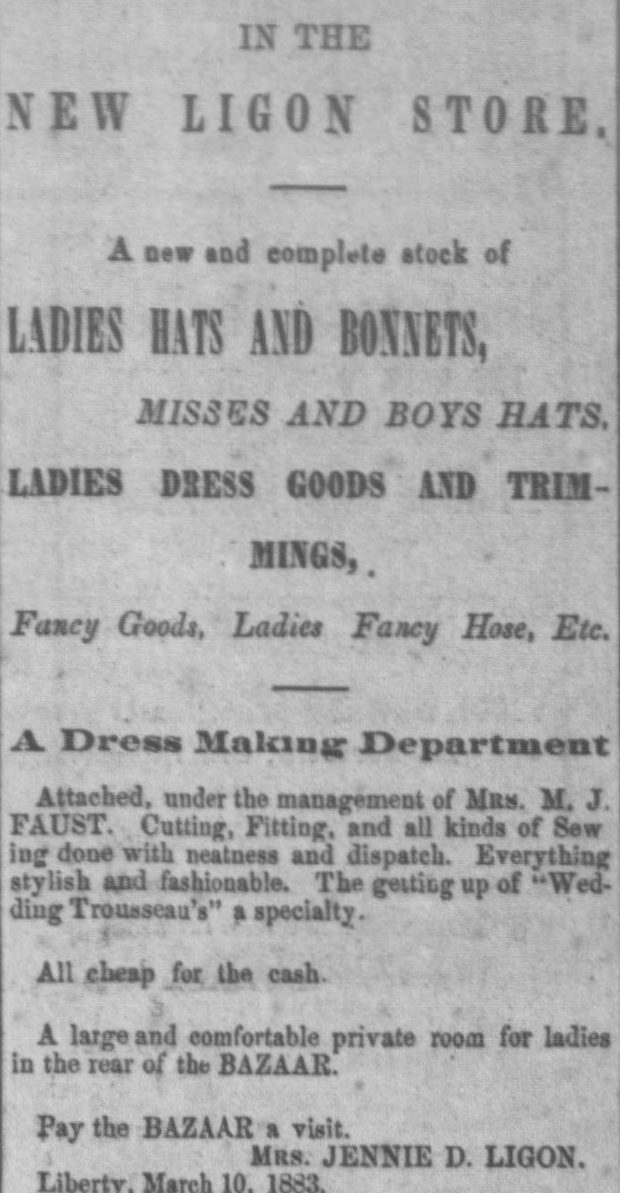 Jennie Ligon: from the Ladies Bazaar to the Gloster post officeThe 1890sJennie Ligon sold hats, bonnets, and dress goods before becoming postmaster of Gloster, Mississippi, in 1898. She held the office for fifteen years, as its staff and rural delivery service grew.
 John Oaks of Exeter: a soldier's widow has to prove a marriageAbout 1843John Oaks served three enlistments in the Revolution and drew an $8 pension at Bangor. When he died at Exeter, Maine in June 1842, his widow had to prove a Thanksgiving-day wedding of 1783 that left no record. A woman who called him her brother swore to it; the claim was rejected.
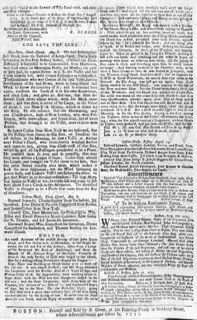 William Oake and the fire at ShrewsburyAbout 1723On the night of August 7-8, 1723, the new house of Captain John Keyes at Shrewsbury burned with five people in it, among them an eighteen-year-old apprentice named William Oakes who may have been a son of Nathaniel Oak of Westborough. The newspaper account, a diary entry and a printed genealogy tell it; only the carpenter escaped.
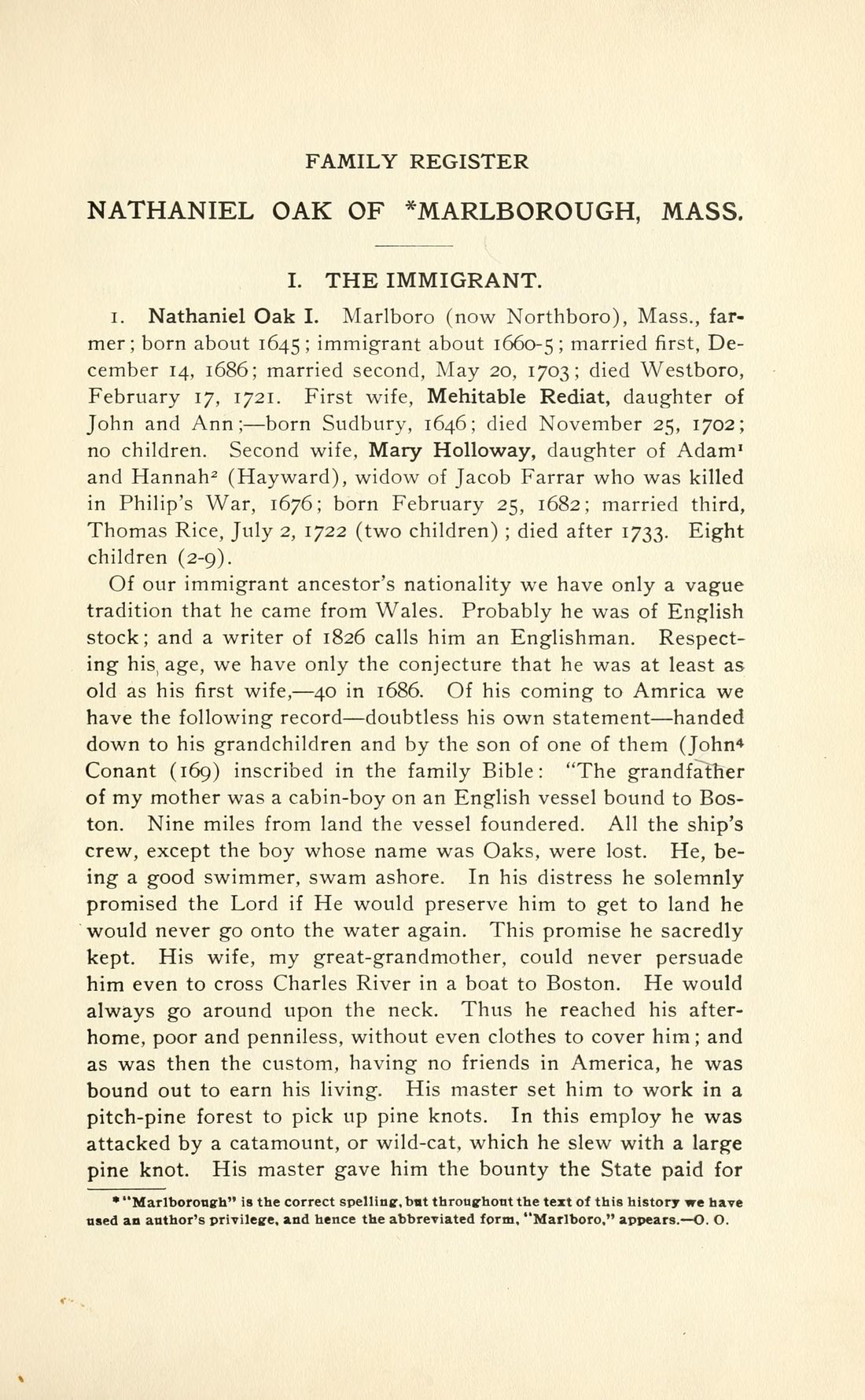
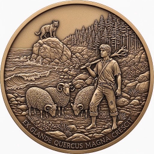 Nathaniel Oak and the cabin-boy storyAbout 1680A family account tells of a shipwrecked cabin boy, a catamount bounty, and sheep bought with the reward. Nathaniel Oak's life as a Massachusetts farmer is better documented than the story of how he arrived.
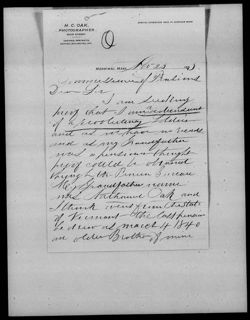 Joseph Oak asks the Pension Office about his grandfather, 1895About 1895In November 1895 Joseph Oak of Merrimac wrote to the Pension Office on a photographer's letterhead, hoping to prove his grandfather Nathaniel Oak had fought in the Revolution. He thought he had been a captain, and that he would have been 133.
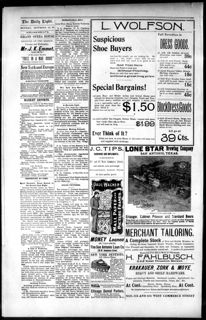 William Banton Clarkson in the cotton trade, 1895 to 1916About 1895A federal suit over a cotton buyer recruited from Great Britain in 1895, a reported $439,901.94 partnership inventory in 1896, and two bankruptcies, in 1904 and 1912: the paper trail of William Banton Clarkson's business, and three same-surname men it does not identify.
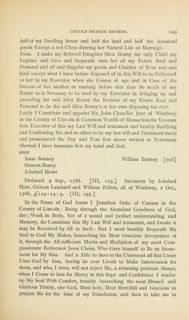 Captain Jonathan Oaks: a carpenter from Marlborough to the KennebecAbout 1784Jonathan Oaks, probably the son of Nathaniel born at Marlborough in 1717, was a carpenter in Stow and Harvard and a "Capt." in the church records before he moved to Canaan on the Kennebec in 1772. His 1784 will names sixteen children and leaves his eldest son ten shillings "if he Ever Comes to this place again."
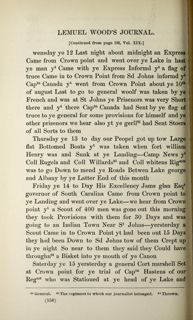 Captain Benjamin Hastings of BoltonAbout 1759Captain Benjamin Hastings of Bolton was dismissed with disgrace at Crown Point in 1759 and led a company to Cambridge in 1775, with Nathaniel Oakes on its roll. The span 1702 to 1756 attached to him joins two men.
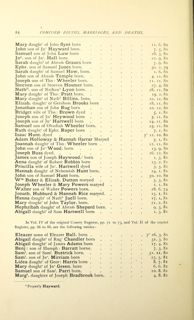 Mary Holloway: three marriages and a working widowThe 1720sMary Holloway was born at Concord in 1681/2, married Nathaniel Oake in 1703, Thomas Rice Jr. in 1722 and Deacon John Fay in 1744, and in 1749 was nursing in the Westborough minister's house. Town records and Ebenezer Parkman's diary trace her; her death has not been found.
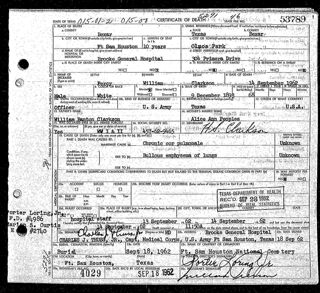 Percy W. Clarkson: from a Houston household to major generalThe 1940sPercy Clarkson rose to major general. The Army Register documents his promotions; later accounts describe his service in France, the Philippines and the Pacific.
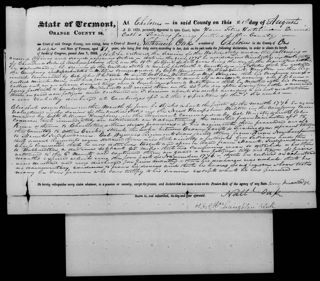 Captain Nathaniel Oak of Chelsea, VermontAbout 1794In 1794 Chelsea, Vermont, paid Capt. Nathaniel Oak in wheat for building its pound, stocks and sign-post. A town history, a pension file and two town clerks' cards follow him from Winchester, New Hampshire, through a second marriage, to Exeter, Maine, where he died in 1840.
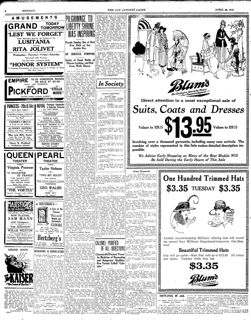 May Kelso and the Battle of Flowers, 1918About 1918In April 1918 San Antonio's Battle of Flowers Association, led by Mrs. Winchester Kelso, put a military and Red Cross parade and a service before the Alamo in the place of the flowers. The San Antonio Light credits her association with planning it and reports $802.23 in the Red Cross flags.
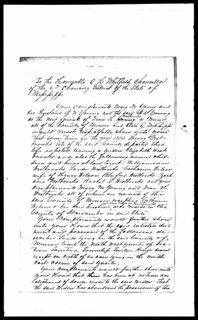 Mary Young asks the court to divide her father's land, 1871 to 1872About 1871In 1871 Mary Young and her husband asked a Mississippi chancery court to divide her late father's land, or sell it, and said her brother had worked it alone for ten years. His reply was a motion to dismiss; the papers end there, with no decree.
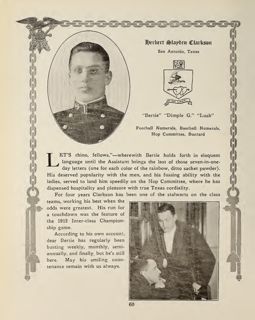 Herbert Clarkson and the report on Patton, 1943About 1943In September 1943 Eisenhower's inspector general looked into Patton's treatment of soldiers in Sicily. A historian names Colonel Herbert Slayden Clarkson as the officer and describes his report; the report itself, in an Abilene archive, has not been checked for this account.
More stories and research notes
- Henry Dow's Hampton and the family's Maine connection (The 1640s): Henry Dow moved to Hampton, New Hampshire, in the 1640s and later served as selectman. Printed genealogies trace his descendants to Skowhegan, Maine; the later links to the Oak family remain unverified.
- How the cabin-boy story was handed down (About 1899): The Lewiston Journal of April 29, 1899 is the earliest printing found of the Oak family's shipwreck, catamount and sheep story, and the Vermont Phoenix of January 26, 1900 is the first to say cabin boy. The longer versions, in a 1905 Jefferson County sketch, the 1906 family register and a typed copy, all lead back to one note by John Conant, born in 1773. The family Bible it was pasted into has not been found.
- John Conant of Brandon, Vermont: a mill owner who kept the family's story (About 1796): John Conant, Nathaniel Oak's great-grandson through his mother Lydia Oaks, wrote down the cabin-boy story his mother and uncles had told him. He himself built Brandon, Vermont's mills and furnace from a half-share bought in 1796, served the town for decades, and died in 1857 or 1856, the record's own figure disputed by a later family genealogy.
- Nathaniel Oake Jr. and Kezia: from Westborough to Bolton (About 1727): Nathaniel Oake Jr. married Tabitha Rice in 1727 and Kezia Maynard in 1736, raised children at Westborough, and was at Bolton by 1746. Church records and a probate docket trace the family; his death has not been found.
- The attack at Goodnow's garrison, August 1707 (About 1707): On August 18, 1707, raiders killed a woman near Samuel Goodnow's garrison at Marlborough, home to the Oakes, Forbush and Fay families. A newspaper, a letter and a petition tell the pursuit; a family register puts Nathaniel Oak in the fight, which no source confirms.
- John Oake and Susanna Allen of Westborough (About 1752): John Oake of Westborough died of cancer in 1752, leaving a widow, Susanna Allen, and three children. Parkman's diary, church records and the probate docket follow the family; she married John Butler of Shrewsbury in 1754.
- King Follett: Hannah Oak's son and the King Follett Discourse (About 1844): Hannah Oak's son King Follett joined the Latter-day Saints in 1831, was jailed in Missouri in 1839 and acquitted, and was killed in a Nauvoo well in 1844. Joseph Smith's sermon in his memory became the King Follett Discourse.
- Captain Jonathan's grandchildren: from the Kennebec to Illinois, California and Boston (About 1848): Captain Jonathan Oaks's grandchildren left the Kennebec for Illinois, the California gold fields, Boston, Charleston and a farm the boundary line put in Canada. The 1906 register follows them: a privateer's widow who married a Boston baker who had served under Napoleon, a woman who married the author of "Home Again," and the father of the railroad man Thomas F. Oakes.
- Emanuel and Betsey in the Billingsley papers (About 1857): A 1936 Billingsley family history names Emanuel, Betsey and eight children in its account of people enslaved by Jeptha Billingsley. It summarizes an 1857 deed and an 1862 will; neither original has been examined.
- Three Oake marriages into the Maynard family, 1735 to 1737 (About 1735): In 1735, 1736 and 1737 three Oake children married into the Maynard families of Marlborough and Westborough. A Parkman diary entry of 1738 shows Kezia's father fetching the minister to baptize her dying baby, and his will of 1755 leaves her twelve pounds.
- Nathaniel Oak's seven living children, 1729 (About 1729): In April 1729 the Middlesex probate judge sent five men to divide the Westborough farm of Nathaniel Oak, dead eight years. Their return names seven living children, gives the eldest a double share, and leaves out William, who had died at Shrewsbury.
- The Lewiston Journal of April 29, 1899: what it says about Nathaniel Oak (About 1899): On April 29, 1899 the Lewiston Journal printed a Skowhegan feature on Captain Jonathan Oak that ends with his father Nathaniel working his passage on a vessel, shipwrecked and the sole survivor, killing a catamount and investing in sheep. It is the earliest printing found, by nearly nine months, and says only that "tradition" tells it.
- Seth Oak of Winchendon and Athens: a captain's company and a Vermont justice (About 1777): Seth Oak, born at Westborough in 1733, has no pension file of his own, but four other men's files name him as their captain at Winchendon in 1777. He went to Athens, Vermont in the winter of 1780 and was its first justice of the peace.
- Dempsey Nash, the "Abolition" candidate (About 1832): A Virginia newspaper called Dempsey Nash the only "Abolition" candidate in an 1832 election. Whether he was the family's Dempsey remains unresolved; a Tennessee court file records the division of ten enslaved people from that man's estate.
- Lucinda Allen Oak at ninety-four (About 1916): At ninety-four, Lucinda Oak greeted callers with what the newspaper called "keen wit and kindly greetings." A former teacher and farmer's wife, she spent sixteen years as a widow in Skowhegan, where local papers followed her birthdays.
- Herbert C. Oak: the name below the portrait (The 1890s): Two surviving photographs lead to a Merrimac photographer, his trade and the household he shared with Cora Harvey.
- The Rileys and the Weisses of Paterson, 1880 to 1996 (The 1890s): An ironworker from Harrisburg and a Swiss-born weaver brought their families to Paterson, the Silk City. A marriage license, censuses, draft cards and obituaries follow the Rileys and the Weisses until the two families became one.
- The Milewskis, from Zarnowo to Manayunk and Harrison, 1894 to 1981 (The 1890s): A Polish family landed at Philadelphia in 1894 with a boy not yet two. Death certificates, a naturalization petition and censuses follow three generations from the Manayunk mills to RCA in Harrison, New Jersey.
- The DiSantos, from Pescolanciano to Newark and Irvington, 1906 to 1984 (The 1900s): Domenico DiSanto left Pescolanciano for Newark in 1906; his wife followed in 1921, and he died two years later. Her own naturalization petition tells how she raised their children in Newark and Irvington.
- Jessie Lawrence Oak, home demonstration agent, 1929 to 1972 (The 1930s): In a 1981 interview, Jessie Oak remembered the Depression from the farm kitchens of Knox, Lincoln and Aroostook counties: canning days, made-over clothes, clinics and sleigh rides to meetings. Her aunt, a Portland pathologist, made Oregon's 1918 influenza serum.
- Winchester Kelso of Eagle Pass and San Antonio, 1858 to 1925 (About 1858): A DeWitt County farmer's son became a Texas judge, an authority on Mexican law and, by one account, Porfirio Díaz's closest American friend. Five newspapers covered his death in 1925; his daughter married into the Clarkson family.
- Florence Alice Clarkson Groos: a Liverpool merchant's eldest daughter in San Antonio (About 1907): William Banton Clarkson's eldest daughter married Fred C. Groos in San Antonio in 1907. She was the informant on her father's death certificate and died after an automobile accident in 1964.
- Cissie Ligon's wedding at the Little Church Around the Corner (About 1943): Natalee "Cissie" Ligon of Tulsa and Austin married Herbert Kelso Clarkson in New York in 1943, raised a daughter in San Antonio, and, the evidence suggests, later lived under a different name in Port O'Connor, Texas.
- Evelyn Oak: a student nurse in Birmingham, a 4-H leader in Danville (About 1950): The 1950 census found Evelyn Dixon at a Birmingham nurses' home, listed as a student nurse. In Danville, New Hampshire, a 1966 newspaper named Evelyn Oak among the 4-H leaders recognized for five years of service.
- Asa Columbus Mitchell of Brazoria and San Antonio, 1795 to 1865 (About 1835): A Brazoria colonist co-signs a besieged 1832 letter, then the November 1835 Declaration of the People of Texas for the Municipality of Washington — not, as an earlier lead had it, the 1836 Declaration of Independence. The Handbook of Texas adds a first wife, Charlotte Woodmancy, not yet on the family tree.
- Henry Lebbeus Oak and the family register (About 1906): Henry Lebbeus Oak spent eighteen years as one of Hubert Howe Bancroft's chief literary assistants in San Francisco, then his later years compiling the 1906 Oak family register this site still draws on. He died four days before his father; his brother Ora continued the book by branches.
- Benjamin Hastings Oak: Chelsea, Boscawen and Garland (About 1826): Capt. Nathaniel Oak's oldest son: army musician, Chelsea town clerk, Boscawen innkeeper next door to Ezekiel Webster, ruined by debt and drink, then a sober selectman and treasurer of Garland, Maine, where he founded the branch that produced the 1906 family register.
- William Oak of Bolton and Winchendon (About 1728): Seth's older brother: a French-war soldier who farmed one bank of Miller's River at Winchendon while Seth farmed the other, lost his oldest son to the spring flood in sight of the house, and died insolvent; his sons went on to Ohio and New York.
- George Oak of Westborough and Rutland, and his son Sylvanus (About 1720): The immigrant's youngest son: a Westborough clothier who served in the French wars and the Revolution and was probably the 'Ens. George Oaks' of Rutland's 1786 school list, and his son Sylvanus, who marched to Cambridge in 1775 and lost the price of his Princeton fulling mill in Continental money.
- Col. Calvin Sanger Douty: Dover's sheriff and the First Maine Cavalry (About 1863): Three times elected sheriff of Piscataquis County, Calvin Sanger Douty resigned to join the First Maine Cavalry, held Ashby's horsemen at Middletown in 1862, wrote over his generals' heads to Secretary Stanton, and was killed leading the charge at Aldie, Virginia, on June 17, 1863. Four thousand people came to his funeral at Dover.
- Lyndon Oak of Garland (About 1844): Elected on the ninth ballot as, he believed, the first straight anti-slavery member of the Maine legislature, Lyndon Oak lived to vote for the Thirteenth Amendment in 1865, founded Garland's high school, served the state college at Orono for more than twenty years, and left the town's history unfinished at his death in 1902.
- Ivan: Life, family and photographs, with a place to share memories.
- Mike: Life, family and photographs, with a place to share memories.