American Acorns
The attack at Goodnow's garrison, August 1707
The Boston News-Letter of August 25, 1707, reported that thirteen Indians had surprised two men at work in the meadows at Marlborough, about four miles from the center of town, taken both alive and, as they left, "took a Woman also in their marching off, whom they kill'd." One of the prisoners "broke away in a Scuffle, and brought home the Indians Gun and Hatchet," and the garrison and inhabitants followed. This contemporary report names neither the people involved nor the garrison's owner; it mentions no Oak or Goodnow. The original issue was read on GenealogyBank on October 3, 2026: page 2, the "Boston." paragraph in the dispatch headed "Piscataqua, Aug. 22". Its wording agrees with the text later printed by Hudson and Nourse. The story identifying the garrison comes from a later book.
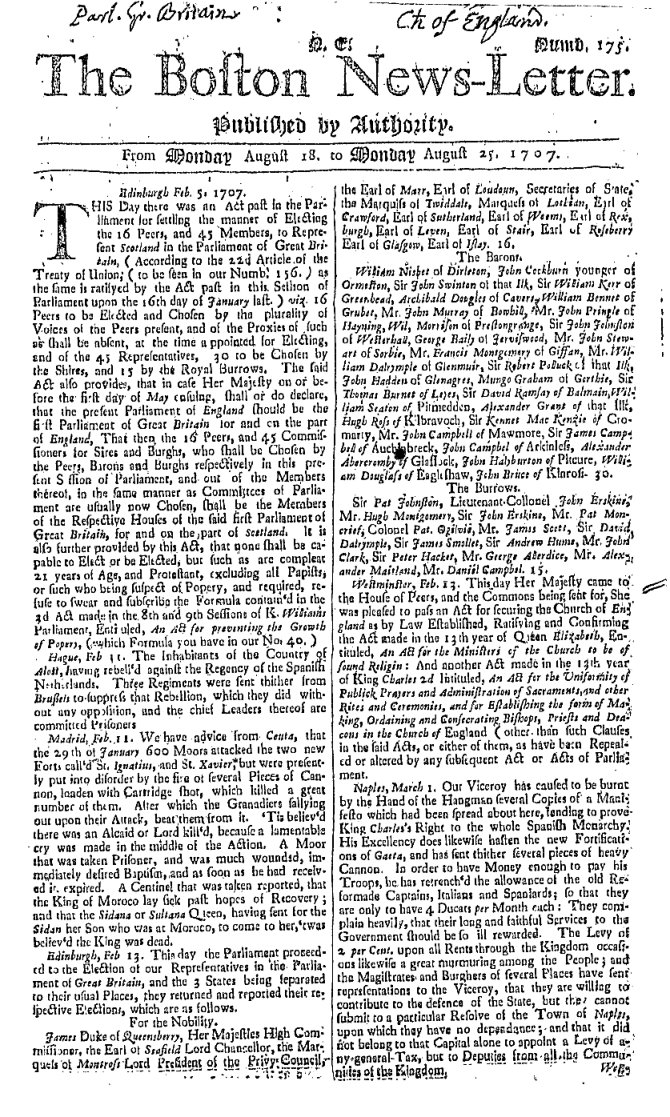
Source: The Boston News-Letter, Boston, 25 August 1707; America's Historical Newspapers (Readex), via AmericanAncestors.org
How it is shown: Complete page as supplied; no crop, no retouch, no search highlight. Attached to Nathaniel Oak as Marlborough context only.
Keep in mind: What the page says: Confirmed. The paper prints 'On Monday last the 16th Current, Thirteen Indians ... surpriz'd two men at their Labour in the Meadows at Marlborough'; one man escaped, a woman was killed, and a pursuit with men from Lancaster and Groton fought the party on Tuesday. The printed '16th' and the weekday disagree: 16 Aug 1707 (Old Style) was a Saturday, and the item's own 'Tuesday at ten of the Clock' and a Lancaster letter dated Tuesday the 19th point to Monday the 18th. Nourse (1884) prints the 16th, Hudson (1862) and Whitney the 18th; no verdict is given here and both are kept. IDENTITY: not applicable. No settler is named, and no Oak or Oakes appears anywhere in the issue; Nathaniel Oak is tagged only as a Marlborough resident whose town the item concerns, the same way the Hudson history pages on the raid are tagged.
Image details
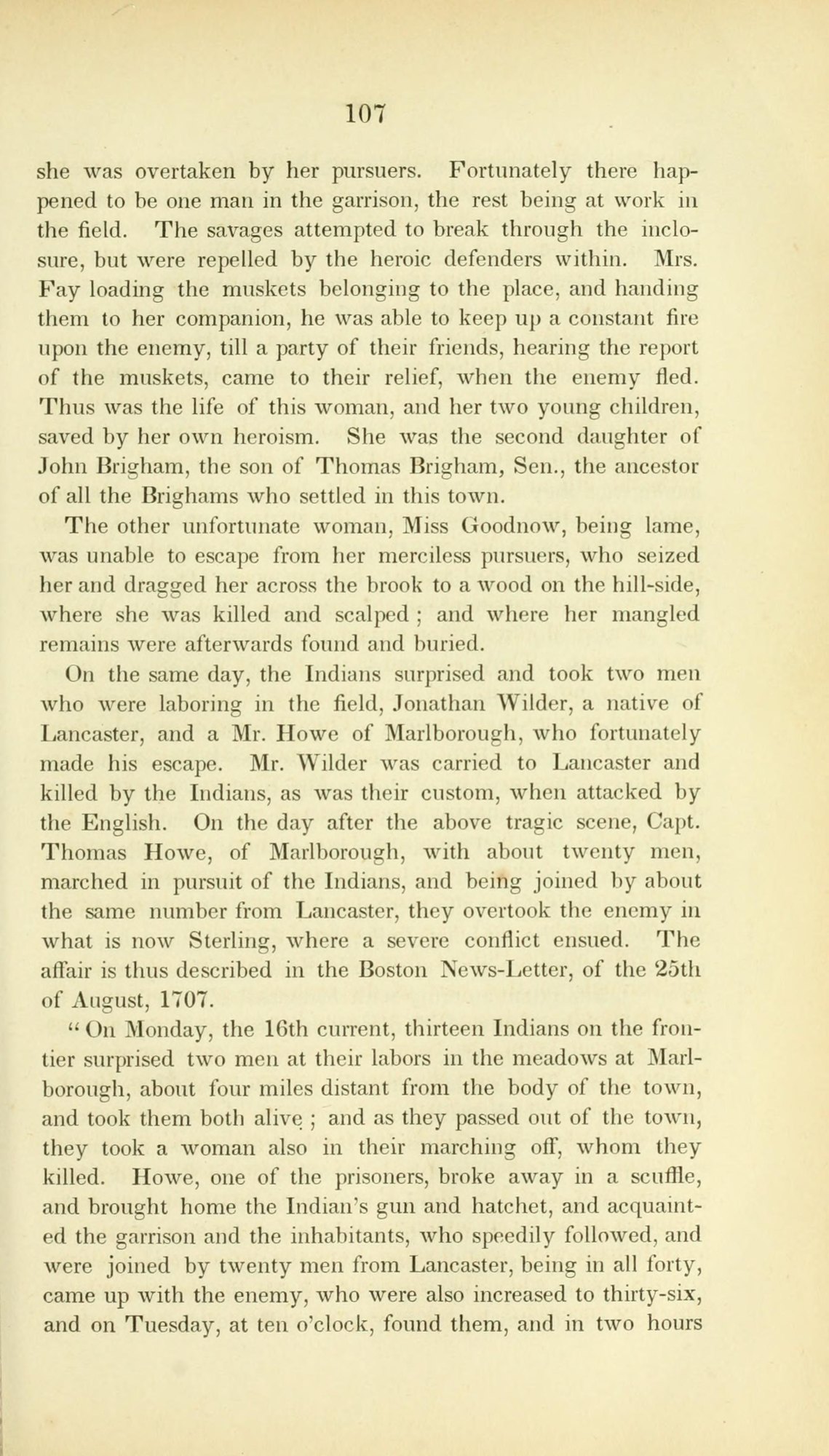
Source: Internet Archive (public-domain scan); historyoftownofm00huds.
How it is shown: Complete page as scanned; no crop, no retouch, no search highlight.
Keep in mind: Context: the account of the raid on Samuel Goodnow's garrison, which (Hudson p. 106) 'was designed as the resort of the families of Nathaniel Oakes, Jonathan Forbush and Gershom Fay'; the garrison list on p. 109 names Nathaniel Oakes. This page itself does not say that Nathaniel was present on the day. Confirmed. The News-Letter text as Hudson prints it says 'Monday, the 16th', but 16 Aug 1707 was a Saturday; Hudson's own sentence on p. 106 says 18 August (a Monday), and the Lancaster letter of 19 Aug places the Tuesday fight on the 19th.
Image details
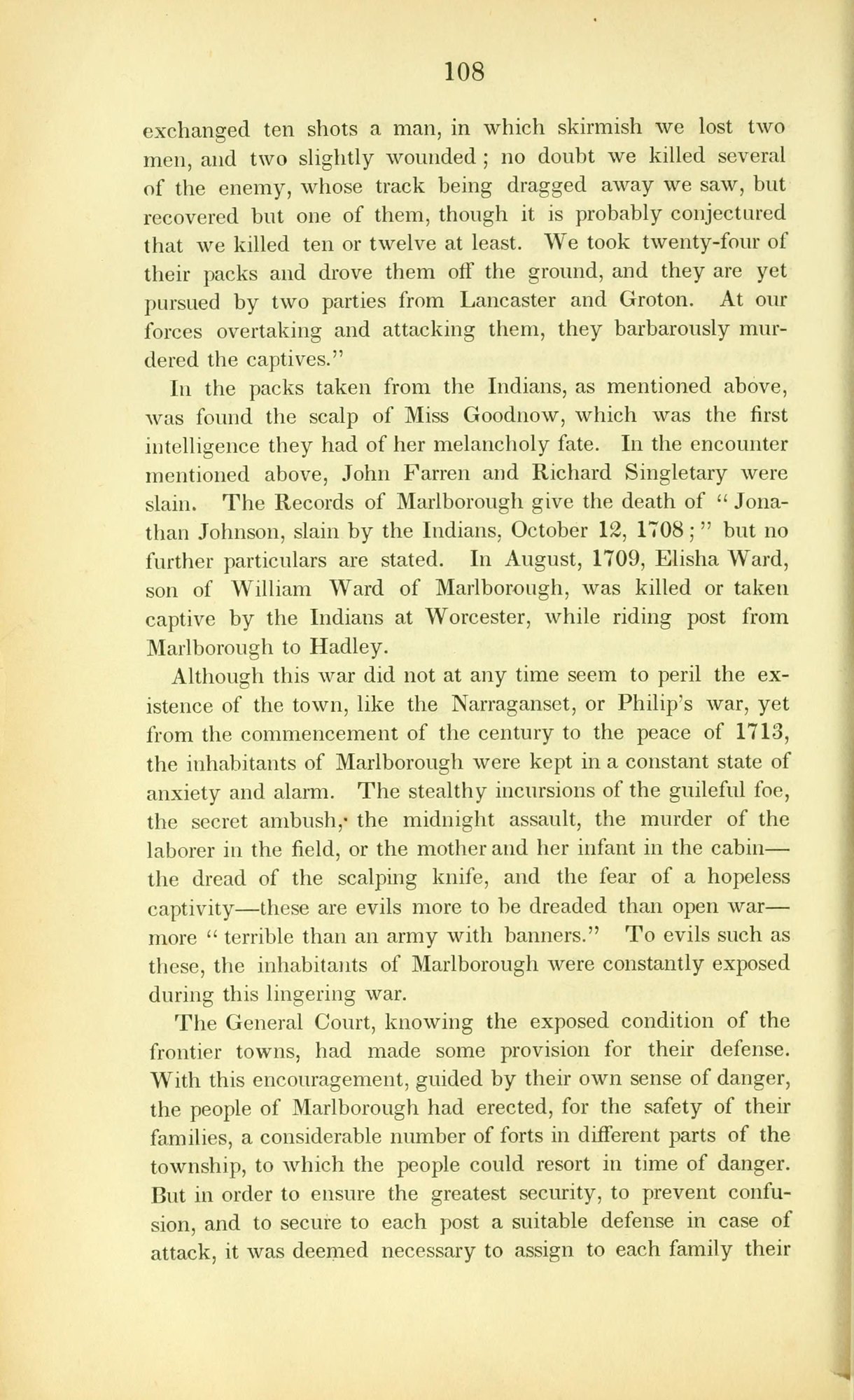
Source: Internet Archive (public-domain scan); historyoftownofm00huds.
How it is shown: Complete page as scanned; no crop, no retouch, no search highlight.
Keep in mind: Context: the account of the raid on Samuel Goodnow's garrison, which (Hudson p. 106) 'was designed as the resort of the families of Nathaniel Oakes, Jonathan Forbush and Gershom Fay'; the garrison list on p. 109 names Nathaniel Oakes. This page itself does not say that Nathaniel was present on the day. Confirmed. The News-Letter text as Hudson prints it says 'Monday, the 16th', but 16 Aug 1707 was a Saturday; Hudson's own sentence on p. 106 says 18 August (a Monday), and the Lancaster letter of 19 Aug places the Tuesday fight on the 19th.
Image details
The date
Evidence note: Both Charles Hudson's History of Marlborough (1862) and Henry S. Nourse's Early Records of Lancaster (1884) print the paper as saying "Monday last the 16th currant." August 16, 1707, by the calendar then in use, was a Saturday, and the Monday was the 18th. Hudson's own narrative gives the 18th. A letter signed by Thomas Howe and Josiah Converse, written at Lancaster on August 19, reports the fight with the raiders "this day about 9 a clock," which puts the fight on Tuesday the 19th and fits an attack on the Monday, the 18th. The original issue, shown above, prints "16th," as Hudson and Nourse give it, so the error is the newspaper's.
Hudson's account of the garrison
Hudson writes that the tragedy happened "in that part of the township now included in Northborough," at Samuel Goodnow's garrison, "on the great road near the stream known as Stirrip Brook." In Hudson's account, Mary Goodnow, Samuel's daughter, and Mary Fay, wife of Gershom Fay, were gathering herbs in a meadow when twenty or more Indians came out of the woods. They ran for the fort. Mrs. Fay reached it and shut the gate; Miss Goodnow, who was lame, was seized, dragged across the brook and killed and scalped in the woods on the hillside. Only one man was in the garrison, "the rest being at work in the field," and Mrs. Fay loaded the muskets and handed them to him until neighbors who heard the shots arrived and the raiders left. Hudson adds that her scalp was later found in a pack taken from the raiders. In his genealogy of the Brigham family, Hudson gives the same story as "a reliable tradition" about Mary Brigham, born May 6, 1678, who married Gershom Fay. Hudson printed the tradition 155 years after the attack; the newspaper and Nourse name none of these people.
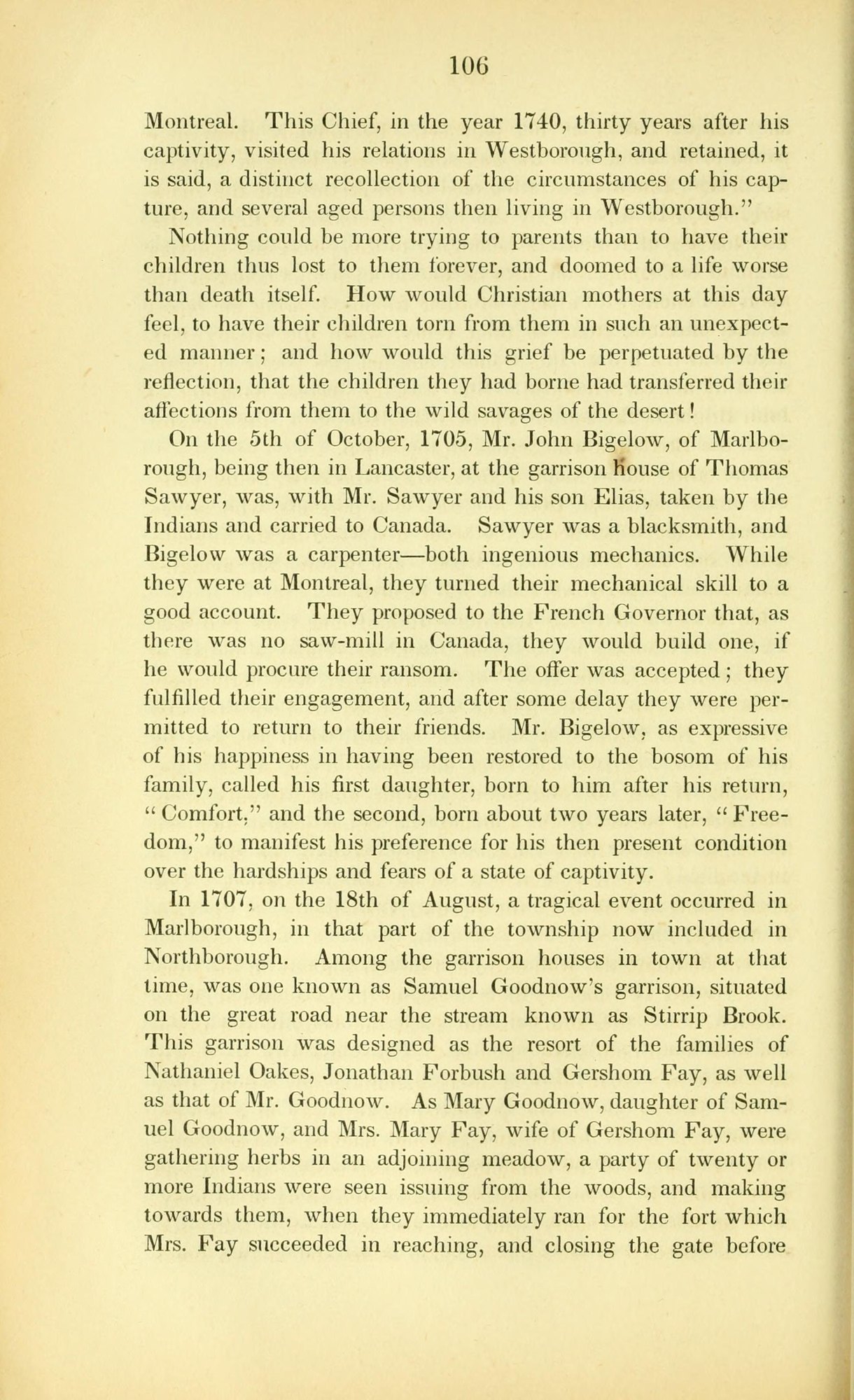
Source: Internet Archive (public-domain scan); historyoftownofm00huds.
How it is shown: Complete page as scanned; no crop, no retouch, no search highlight.
Keep in mind: Context: the account of the raid on Samuel Goodnow's garrison, which (Hudson p. 106) 'was designed as the resort of the families of Nathaniel Oakes, Jonathan Forbush and Gershom Fay'; the garrison list on p. 109 names Nathaniel Oakes. This page itself does not say that Nathaniel was present on the day. Confirmed. The News-Letter text as Hudson prints it says 'Monday, the 16th', but 16 Aug 1707 was a Saturday; Hudson's own sentence on p. 106 says 18 August (a Monday), and the Lancaster letter of 19 Aug places the Tuesday fight on the 19th.
Image details
The pursuit
The next day Captain Thomas Howe of Marlborough, with about twenty men, joined about as many from Lancaster and caught up with the raiders in what is now Sterling. The paper says the two sides "exchanged ten shots a man" over two hours, that "we lost two men and had two slightly wounded," and that the English took twenty-four packs. Nourse names the dead: Richard Singleterry and John Farrar, with Ephraim Wilder and Samuel Stevens wounded, and the captive Jonathan Wilder, twenty, murdered when the English attacked. Samuel Penhallow, whose history of the Indian wars appeared in 1726, says only "On our side two were slain, and two wounded." The place is still called the Indian Fight.
A petition of June 1708 adds names and costs. Samuel Brigham asked on behalf of Marlborough and Lancaster men for payment: Ephraim Wilder was shot through the thigh and lost ten weeks, with a doctor's bill of £4 10s; John Farrar's gun was carried off and his widow was left with children; Jonathan Brigham's horse was killed and Samuel Ward's too; Joseph Newton's and Oliver How's horses were wounded; and burying "three Persons Slain in said Engagement" had cost something. The House resolved, and the Council agreed, to pay Wilder £8 in all, the widow of John Farrar thirty shillings, Jonathan Brigham £4 and Samuel Ward £2.
Where Nathaniel Oake appears
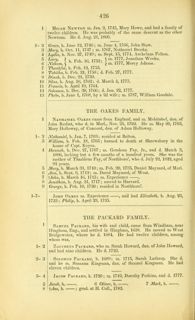
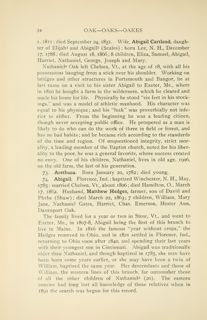
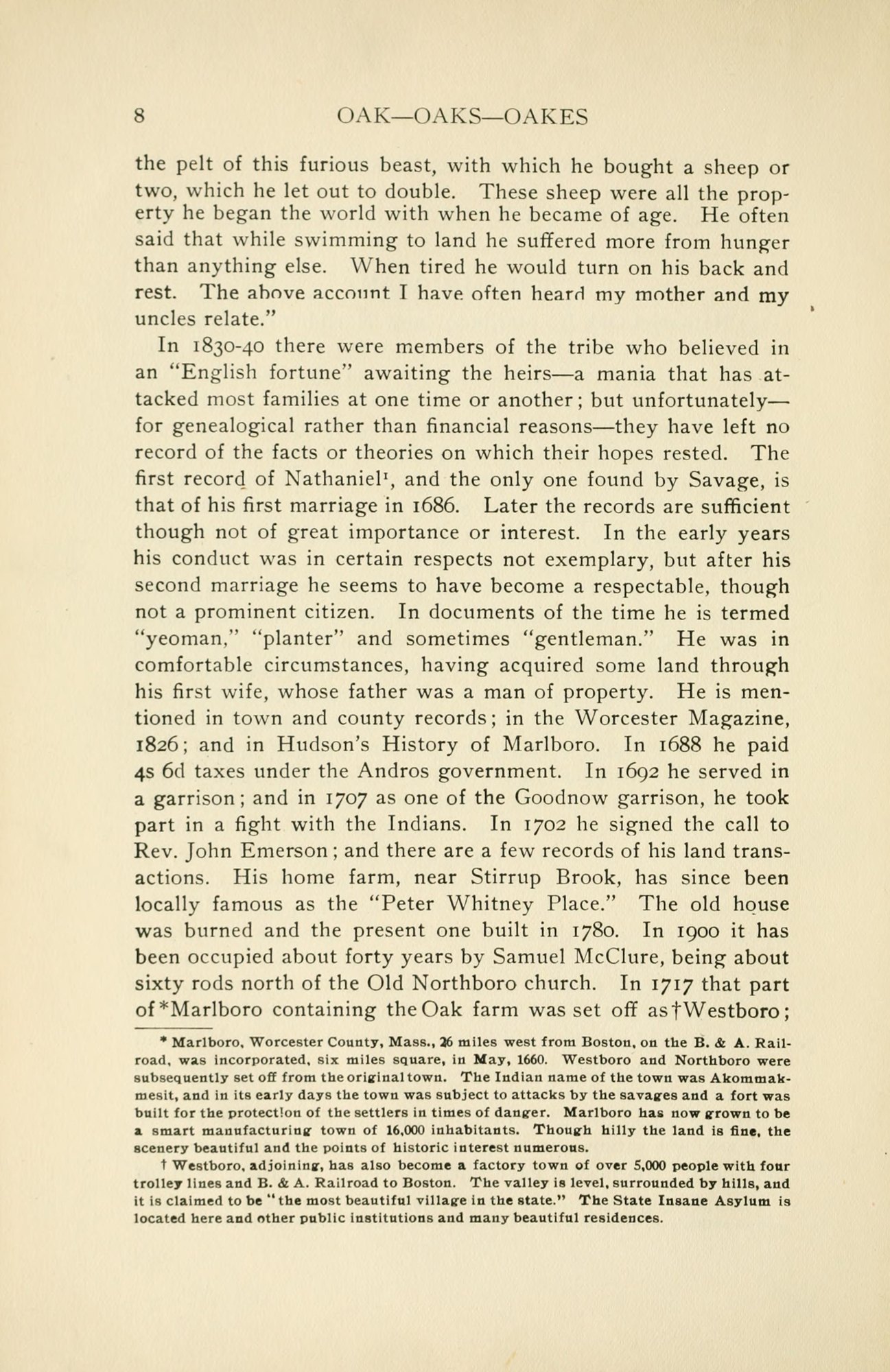
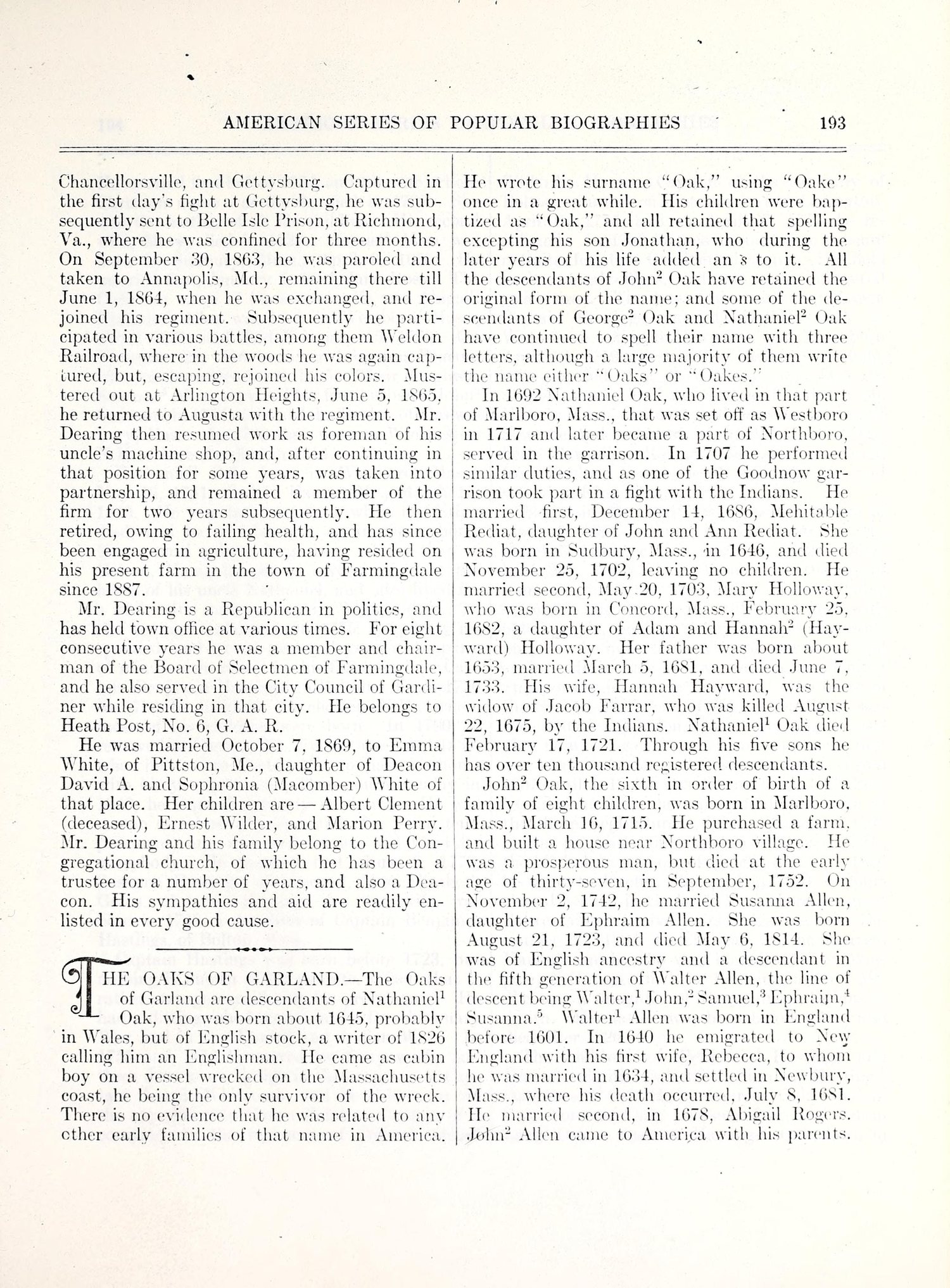
Hudson says the garrison "was designed as the resort of the families of Nathaniel Oakes, Jonathan Forbush and Gershom Fay, as well as that of Mr. Goodnow." His list of garrison assignments, which he ties to 1711, shows "Nathaniel Oakes, Jonathan Forbush, Gershom Fay" at Samuel Goodnow's, garrison no. 12. This probably places Nathaniel's household, including Mary Holloway, among the families assigned to the fort, and the 1906 Oak register places his farm "near Stirrup Brook," where Hudson puts the garrison. The register adds that "in 1707 as one of the Goodnow garrison, he took part in a fight with the Indians." Hudson's account names one man inside the garrison on the 18th, the paper and Nourse name no defenders, and no 1707 roll has been found, so whether Nathaniel was in the garrison or the pursuit is not known. H. L. Oak's 1903 sketch of the Oaks of Garland, Maine, repeats the register's claim and is not an independent source.
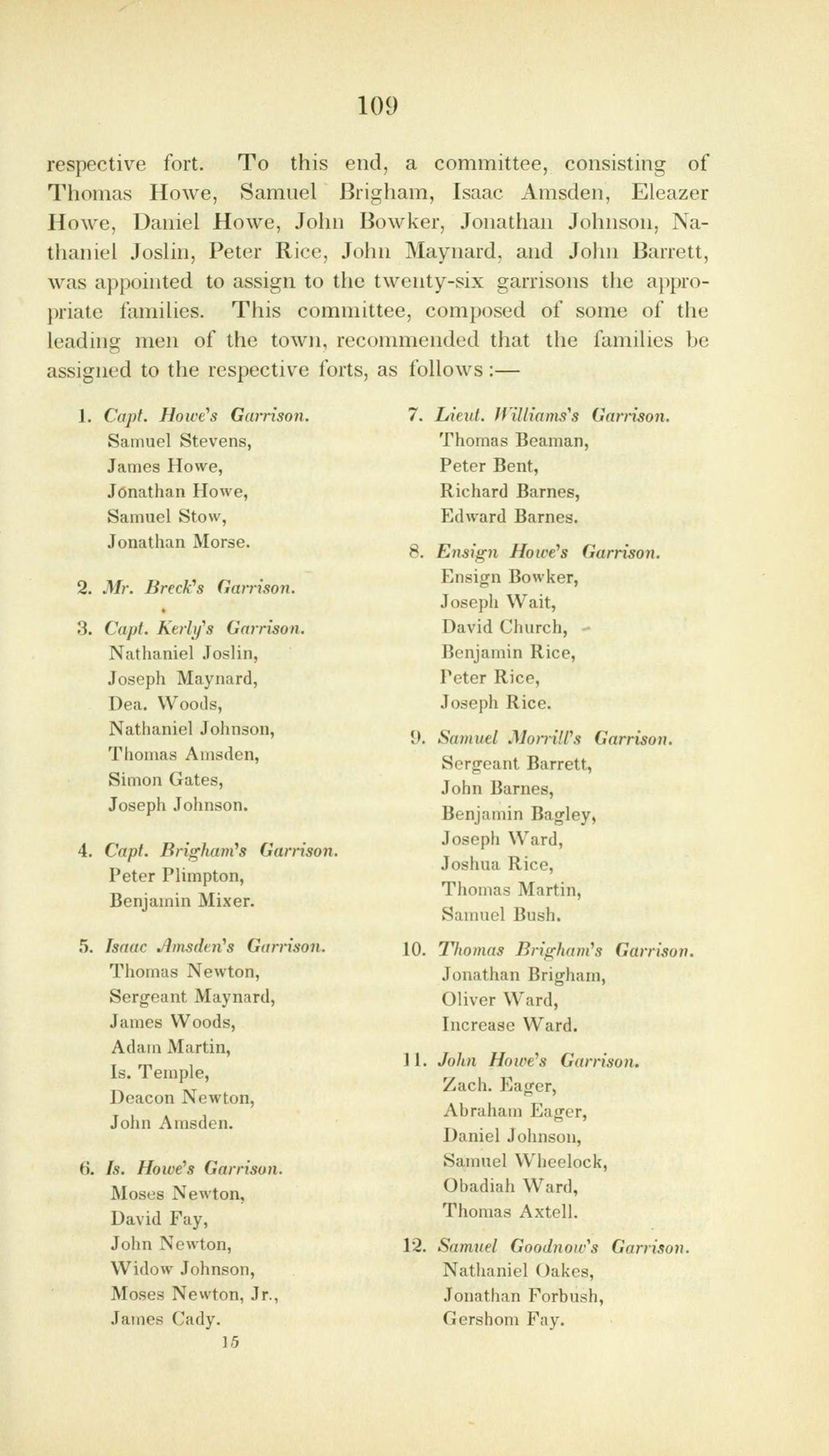
Source: Internet Archive (public-domain scan); historyoftownofm00huds.
How it is shown: Complete page as scanned; no crop, no retouch.
Keep in mind: A printed book, not an original record.
Image details
Source: Internet Archive (public-domain scan); oakoaksoakesfami00oakh.
How it is shown: Complete page as scanned; no crop, no retouch.
Keep in mind: A printed book, not an original record.
Image details
The garrison assignments also name people connected to Nathaniel's family. Jonathan Forbush married Mary's sister Hannah in 1704/5, and he became guardian of Nathaniel's eight children in 1722. A Gershom Fay married Nathaniel's daughter Hannah in 1727; he was probably the younger Gershom, born at Marlborough on September 17, 1703, son of the Gershom and Mary (Brigham) Fay of the garrison story.
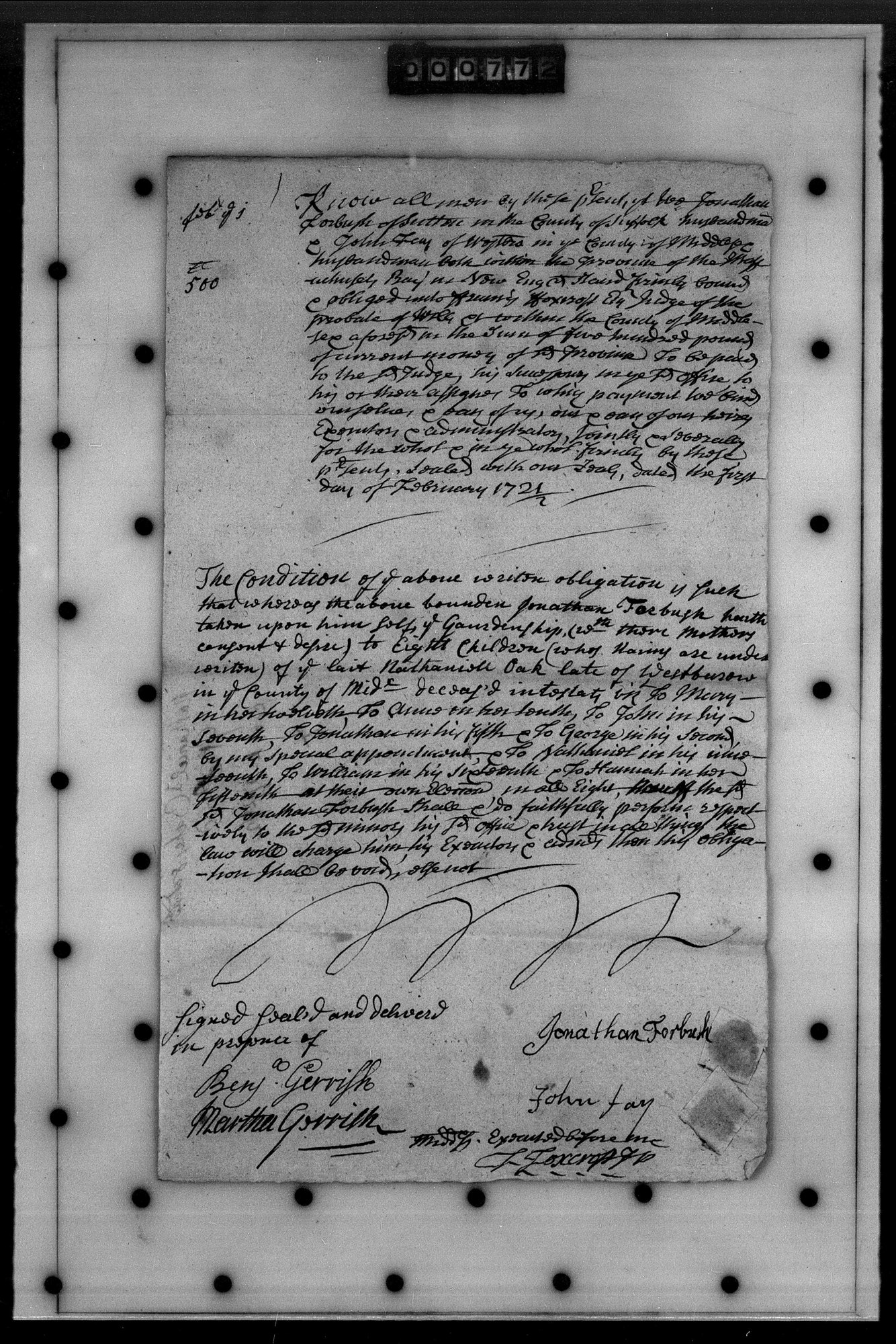
Source: FamilySearch, Probate records 1648-1924 (Middlesex County, Massachusetts), film 007553698, image 774.
How it is shown: Complete frame (original, unaltered); no crop, no retouch, no search highlight.
Keep in mind: Transcribed (frames 766-782); a first reading was made. Confirmed: the eight children and the ordinals for John (seventh), Jonathan (fifth) and George (second). Likely: Anne (tenth) and Hannah (fifteenth). Not reliably read: the ages for Mary, Nathaniel and William. Date and sum Likely. Tagging the eight to the tree's persons rests on the names and the 1906 register order (Likely).
Image details
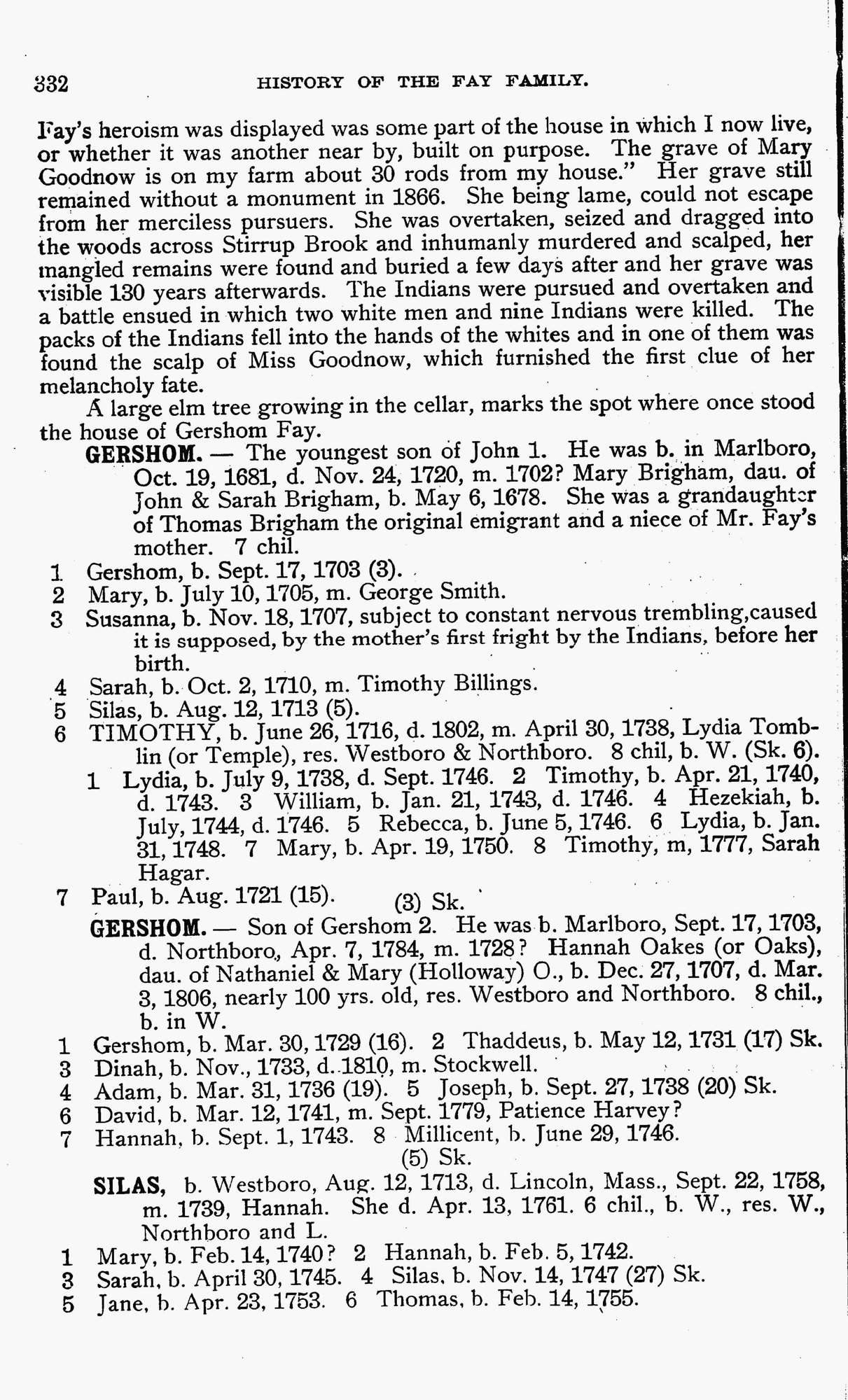
Source: Internet-era scan of a public-domain compiled genealogy, via HeritageQuest Online; O. P. Fay, Fay genealogy.
How it is shown: Complete page as supplied; no crop, no retouch, no search highlight.
Keep in mind: A compiled genealogy, not a record; the marriage year carries a query in the book. Hannah matches the child "Hannah, born 1707" in Walton p. 64.
Image details
What has not been found
The original News-Letter issue of August 25, 1707 has now been read in GenealogyBank and is shown above (page 2 only; page 1 was not read), and the issue of August 18 has not been seen; no free scan of the August 18 issue has been located. Both issues are held by the American Antiquarian Society and other libraries. The state archives volume with the Howe and Converse letter and the petition has not been seen, only the printed copies. A garrison roll for the day, if one was made, has not turned up.
Sources
- Boston News-Letter, August 25, 1707, p. 2, original issue via GenealogyBank, shown inline above; as printed in Charles Hudson, History of the Town of Marlborough (1862), pp. 106-108, and in Henry S. Nourse, The Early Records of Lancaster, Massachusetts, 1643-1725 (1884), pp. 165-166. archive.org/details/historyoftownofm00huds, archive.org/details/earlyrecordsofla1643lanc
- Howe and Converse to the governor, Lancaster, August 19, 1707 (Massachusetts Archives 51:174), and the petition of Samuel Brigham, June 1708, as printed in Nourse, pp. 165-167.
- Hudson, pp. 106-111 (the garrison account and the assignment of families to garrisons) and the Brigham genealogy, pp. 333-334.
- Samuel Penhallow, The History of the Wars of New-England with the Eastern Indians (1726), pp. 44-45.
- H. L. Oak, Oak-Oaks-Oakes: Family Register (1906), p. 8. Public domain; read the whole book: PDF, from the Internet Archive. H. L. Oak in Biographical Sketches of Representative Citizens of the State of Maine (1903), pp. 193-195.
- Concord, Massachusetts: Births, Marriages, and Deaths, 1635-1850 (1895), p. 64; Middlesex County probate papers, case 16186 (1722), film 007553698, frame 774.
The life of Nathaniel's widow is told in Mary Holloway: three marriages and a working widow. The full account of Nathaniel is on Nathaniel Oak and the cabin-boy story, and the searches made for them are summarized on the research log.