American Acorns
How the cabin-boy story was handed down
The long version of the Oak family's cabin-boy story comes from one note, written by John Conant, who was born at Ashburnham, Massachusetts, in 1773 and wrote that he had often heard his mother and her brothers tell it. The note itself has not been found. What survives are copies: a typed copy at American Ancestors in Boston, the text printed in the 1906 Oak family register, and a version in a 1905 county history. Those copies preserve the story, but their relationship matters when weighing it as evidence. What the story says, and how it sits beside the records, is on Nathaniel Oak and the cabin-boy story.
The printings before the long version
Four earlier printings carry parts of the story, and none points to a record behind it. Each is shown from the printed page on the main story, under "Earlier printed accounts, 1826 to 1905."
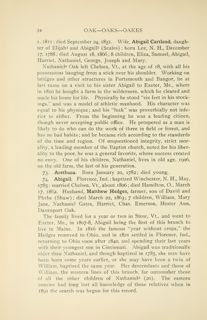
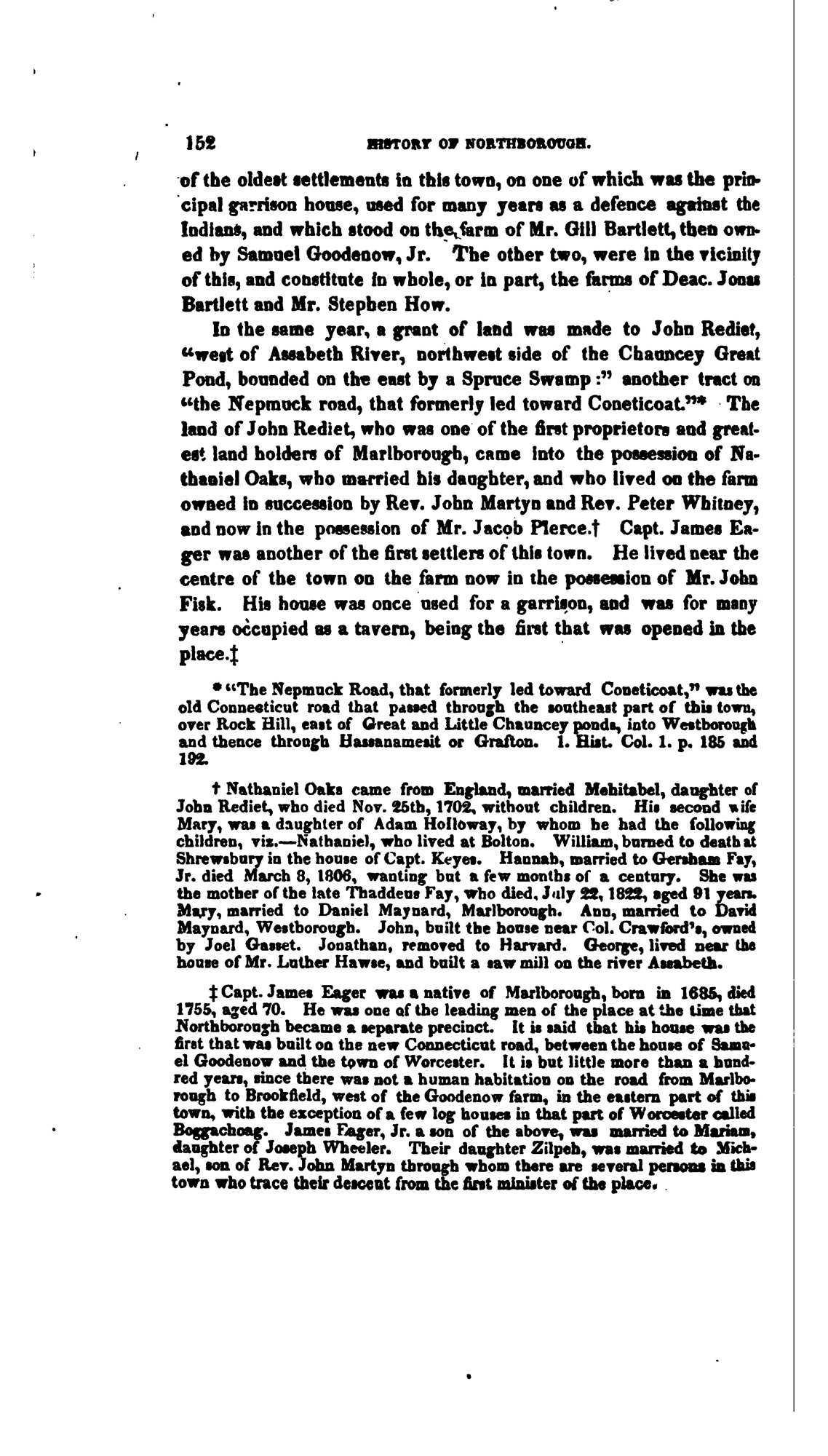
- 1826 and 1862. Allen's History of Northborough (1826, p. 152) and Hudson's History of the Town of Marlborough (1862, p. 426) say only that Nathaniel Oak "came from England." Neither mentions a ship, a wreck, a wildcat or a Bible. See "1826 and 1862" on the main story.
- April 29, 1899. The Lewiston Journal of Maine (Illustrated Magazine Section, p. 20), in a Skowhegan feature on Captain Jonathan Oak, is the earliest printing found of the shipwreck, sole-survivor, catamount and sheep story. It says Nathaniel "worked his passage on a vessel" rather than calling him a cabin boy, and it calls the whole account "tradition." See "April 29, 1899" on the main story and the article read in full on its own page.
- January 26, 1900. The Vermont Phoenix of Brattleboro (p. 2), in a column signed S. A. Holden, is the first printing found that says "cabin boy." It has no sole survivor, wildcat, sheep or Bible, and it cites "the family historian" and Hudson rather than a record. See "January 26, 1900" on the main story.
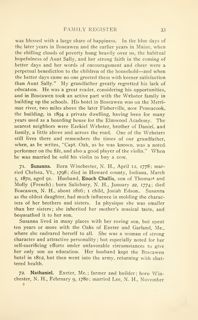
- 1903. Henry Lebbeus Oak's sketch "The Oaks of Garland" (Biographical Sketches of Representative Citizens of the State of Maine, p. 193) is later than both newspapers. It has the cabin boy and the only survivor, with no wildcat, bounty or Bible. See "1903" on the main story.
Source: Internet Archive (public-domain scan); Worcester Magazine, vol. II.
How it is shown: Complete page as supplied; no crop, no retouch, no search highlight.
Keep in mind: Printed local history, not a record. The page says he came from England; his origin is a tradition, not proved (Family tradition). The IA item identifier was not recorded with the file.
Image details
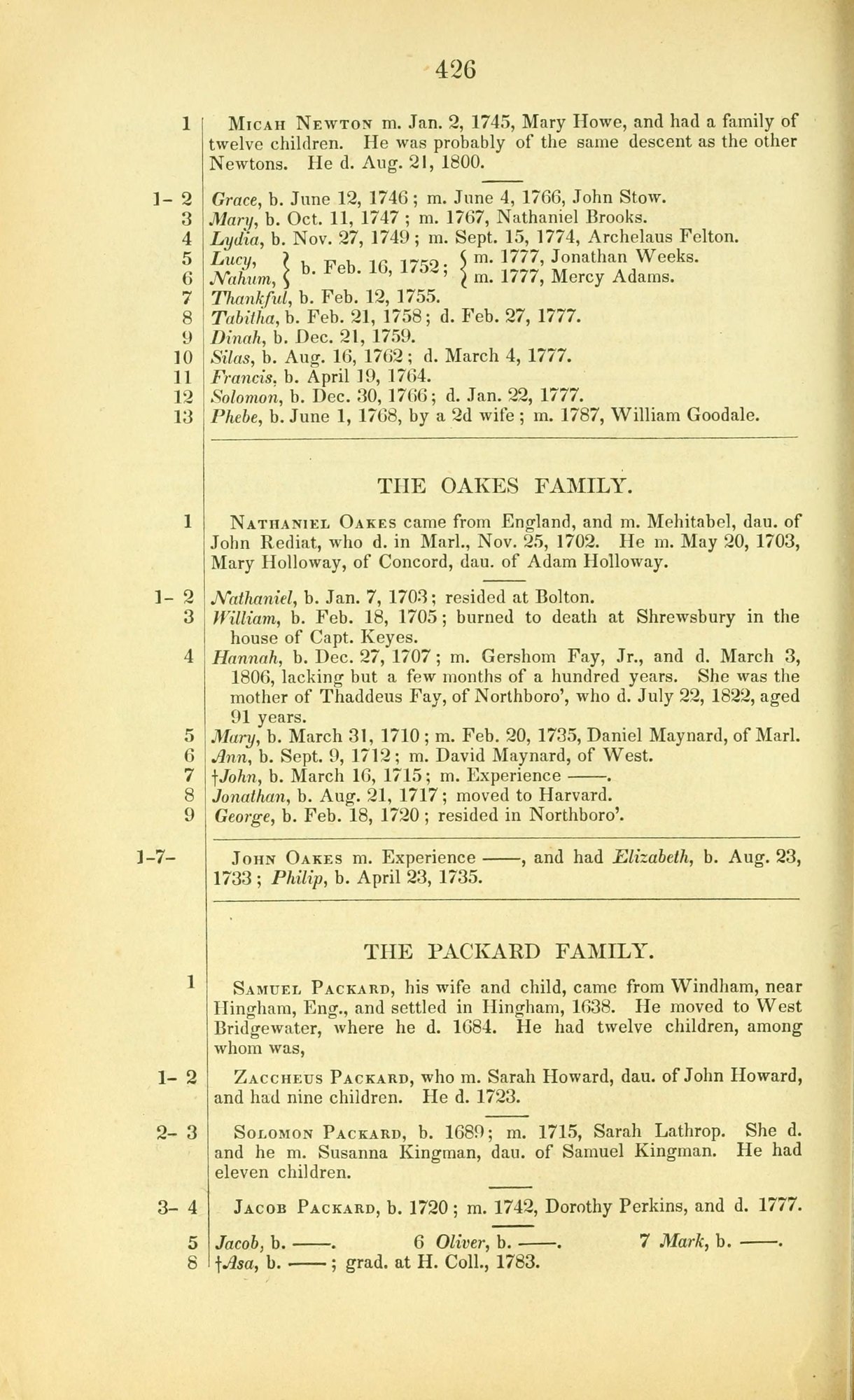
Source: Internet Archive (public-domain scan); historyoftownofm00huds.
How it is shown: Complete page as scanned; no crop, no retouch.
Keep in mind: A printed book, not an original record.
Image details
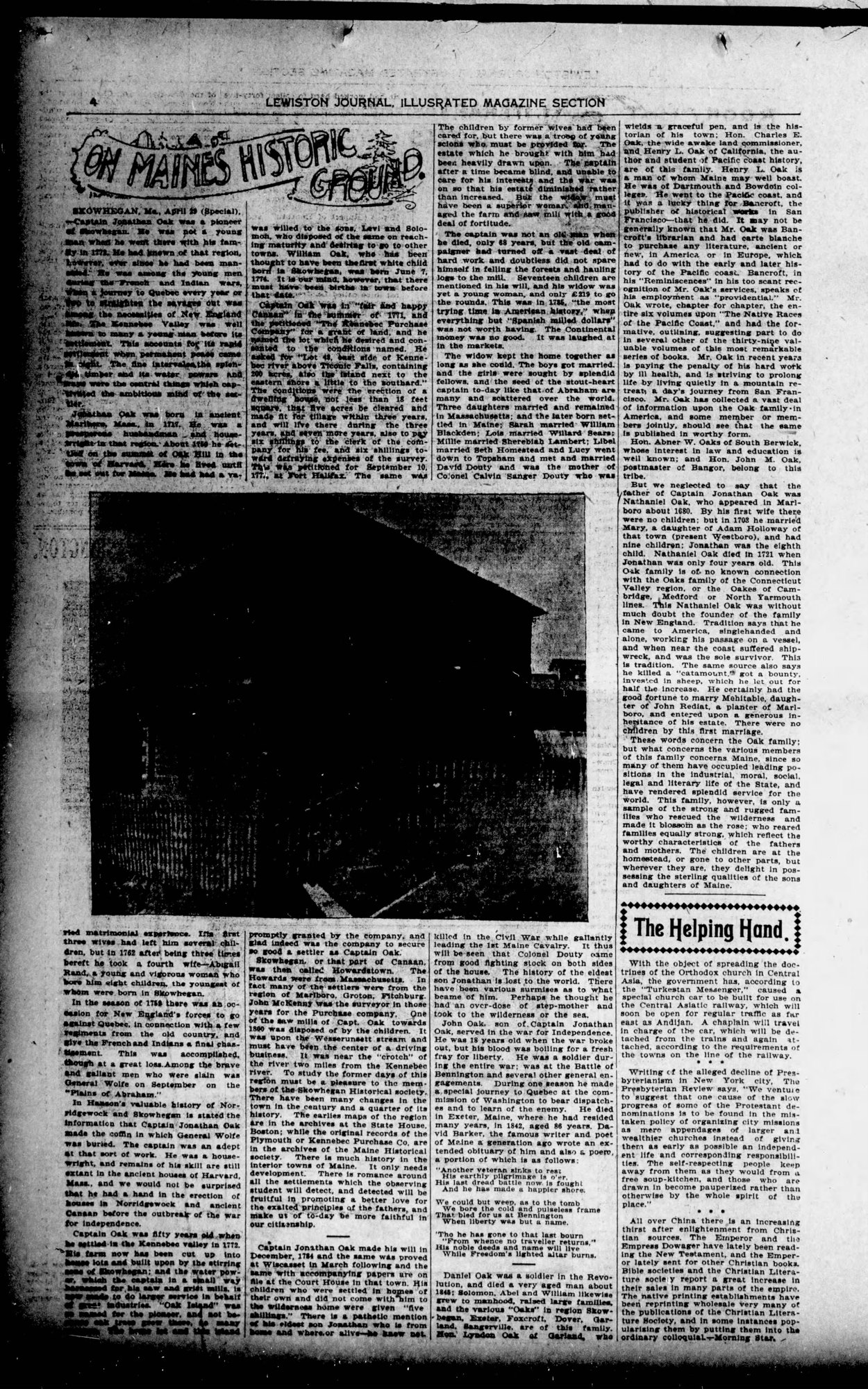
Source: Newspapers.com, full-page original download.
How it is shown: Complete image as saved; no crop, no retouch, no search highlight.
Keep in mind: Original page; see the Lewiston Journal page for the transcription of the Nathaniel paragraph.
Image details
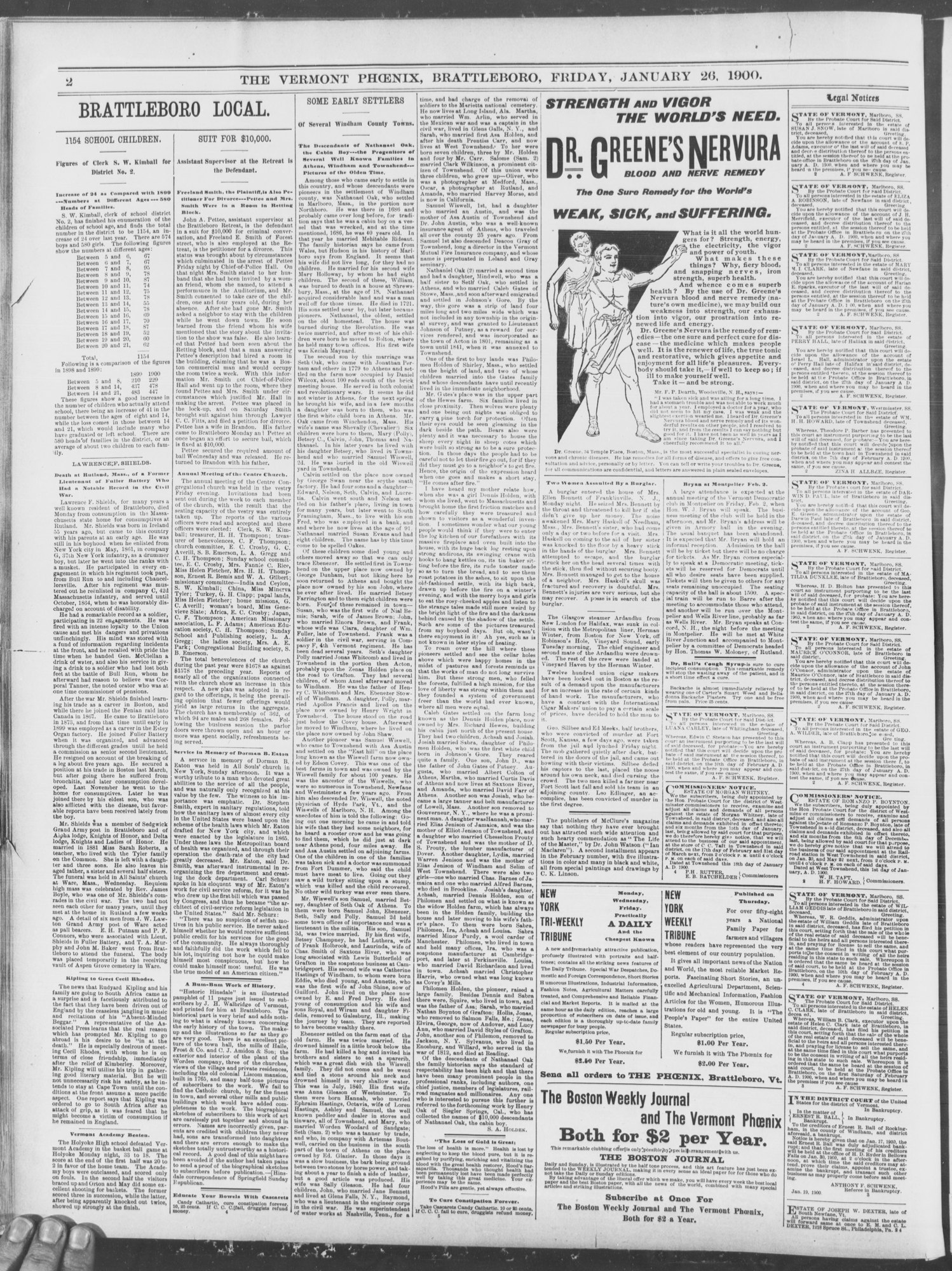
Source: Library of Congress, Chronicling America (public-domain scan).
How it is shown: Complete image as saved; no crop, no retouch, no search highlight.
Keep in mind: Full page as scanned.
Image details
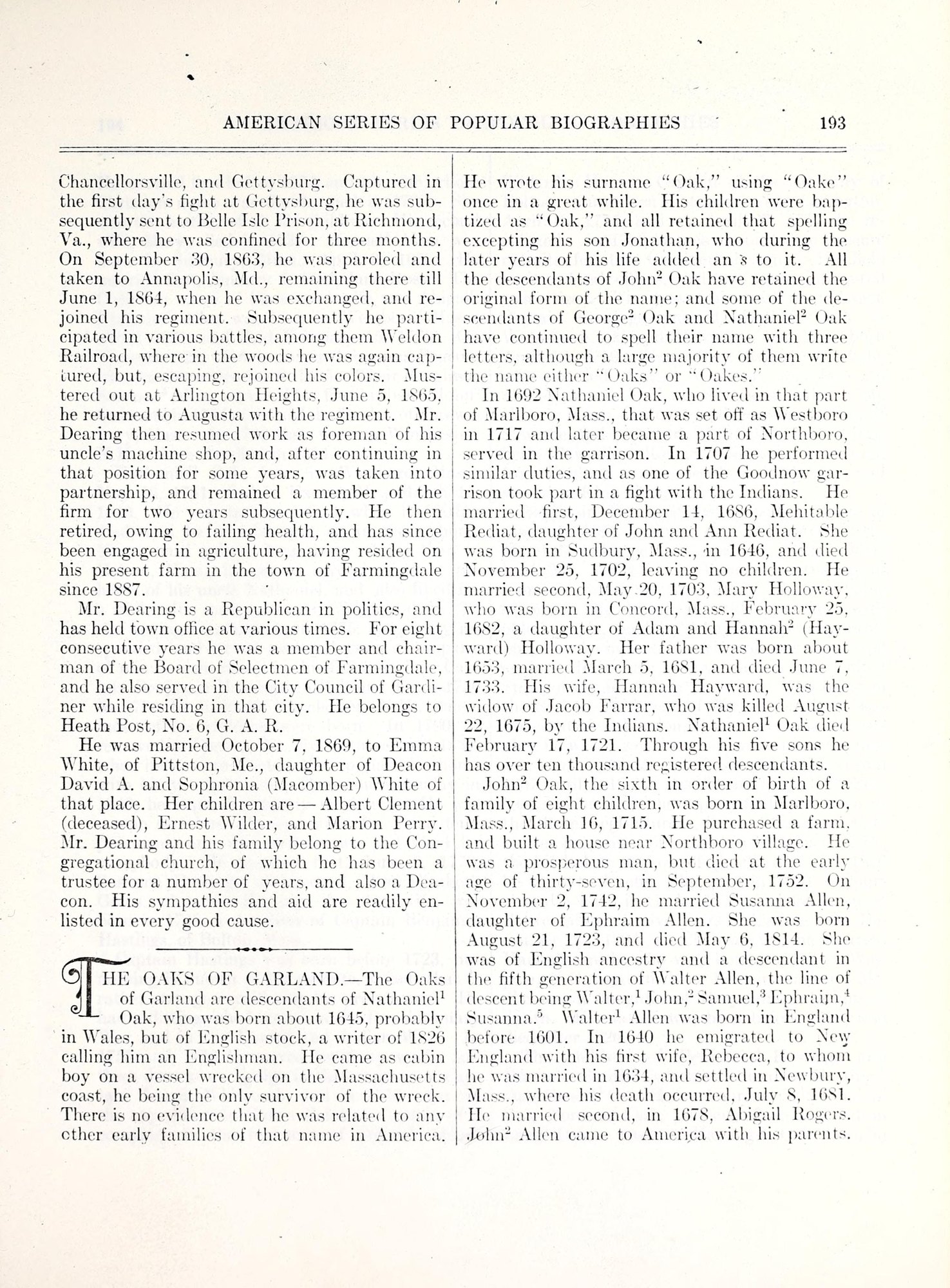
Source: Internet Archive (public-domain scan); biographicalsket00newe.
How it is shown: Complete page as supplied; no crop, no retouch, no search highlight.
Keep in mind: Written by Henry L. Oak, the compiler of the 1906 register: one witness, not two (Main's review, 2 Oct 2026). Family-written text; several dates in it are wrong (see the review). Unconfirmed where only this text says it.
Image details
The 1899 feature says that Henry L. Oak of California "has collected a vast deal of information upon the Oak family in America," and Holden's column ends by sending readers to "the forthcoming work by Henry Oak of Siegler Springs, Cal." That Oak was the source of the 1899 feature is likely but not shown, and his circulars or letters are a likely channel for Holden's column; none has been seen. In the parts read, neither newspaper has Wales, a vow, an indenture, a Bible or Conant. The longer versions came after them, and each leads back to one note written by a man born in 1773.
The writer
He was born at Ashburnham on February 2, 1773, the oldest son of Ebenezer Conant Jr. and Lydia Oak. Robert Collyer's A Man in Earnest: Life of A. H. Conant describes "a curious little manuscript volume inscribed 'Ebenezer Conant, his book, Ashburnham, Jan. 15, 1782,'" written jointly by Ebenezer and John, and prints John's words: "My mother's name was Lydia Oakes; she was born in Stowe, Mass., on the 6th of June, 1743."
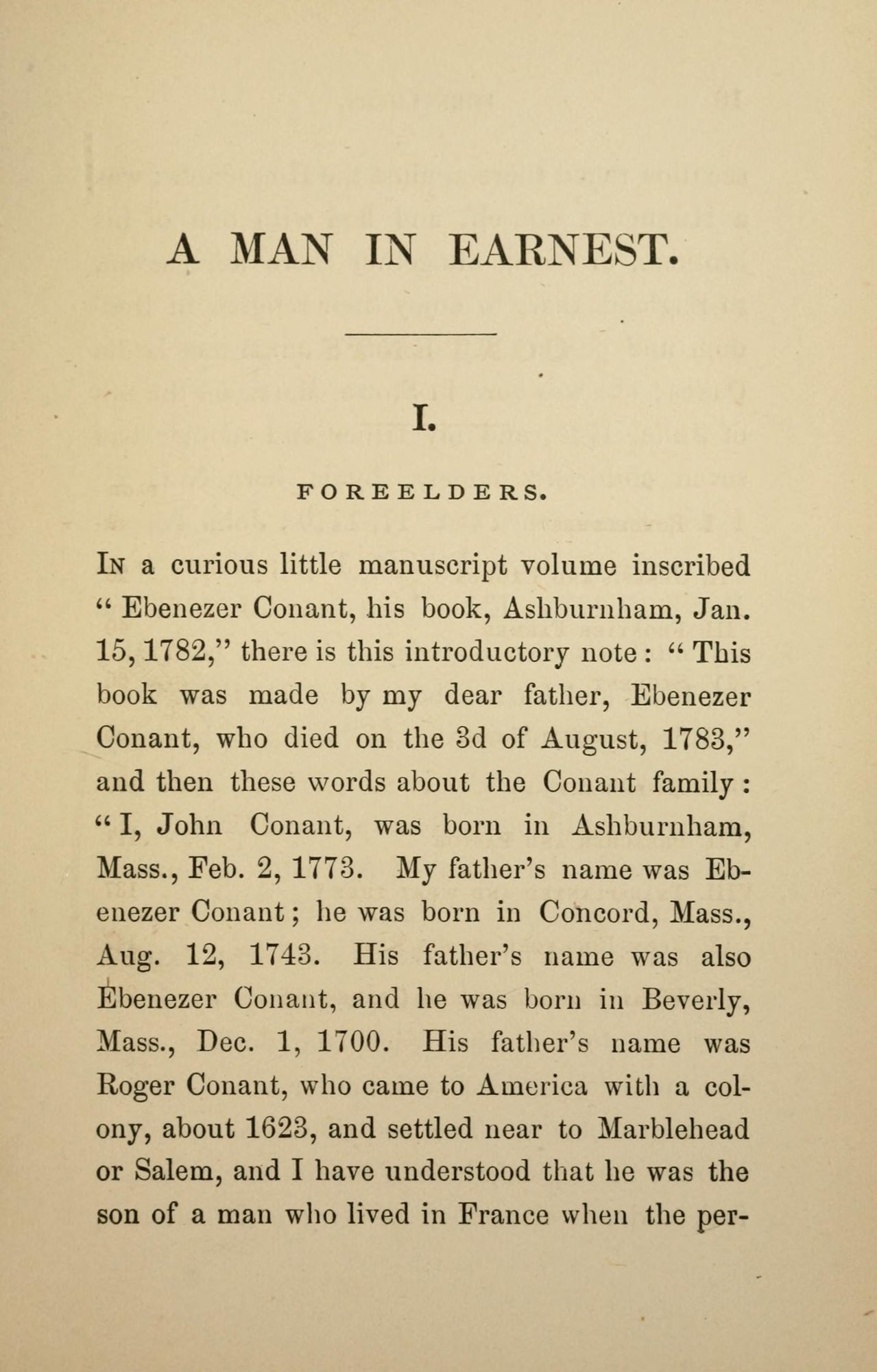
Source: Internet Archive (public-domain scan); maninearnestlife00coll.
How it is shown: Complete page as scanned; no crop, no retouch.
Keep in mind: A printed book, not an original record.
Image details
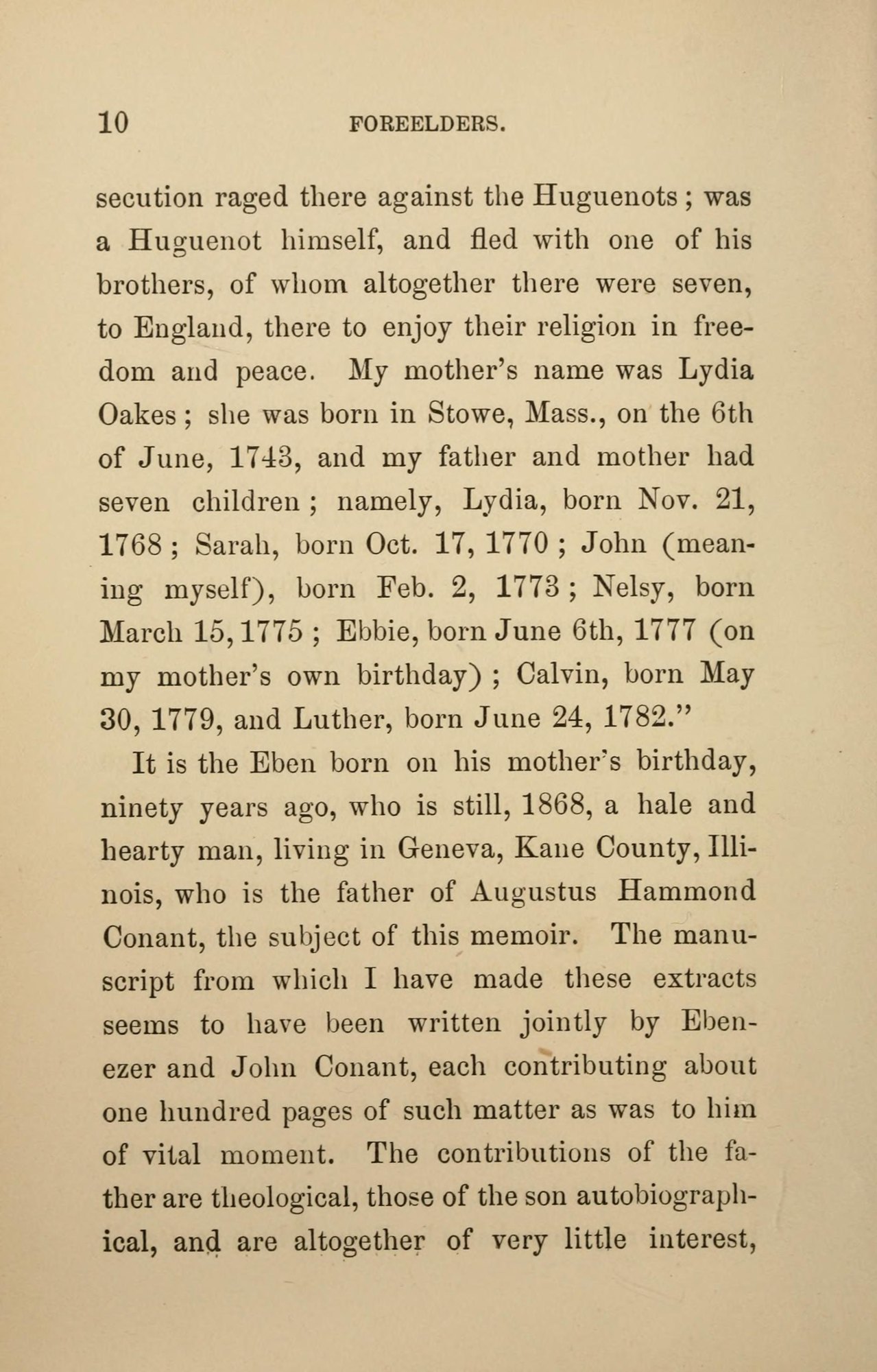
Source: Internet Archive (public-domain scan); maninearnestlife00coll.
How it is shown: Complete page as scanned; no crop, no retouch.
Keep in mind: A printed book, not an original record.
Image details
The 1887 History and Genealogy of the Conant Family says the volume "is in existence, or was in 1868" and takes John's life from that journal, Collyer's book and the Black River Gazette of July 4, 1876. John died at Brandon, Vermont, probably on June 30, 1856; an 1876 history of Brandon gives 1857. The printed extracts do not contain the cabin-boy story.
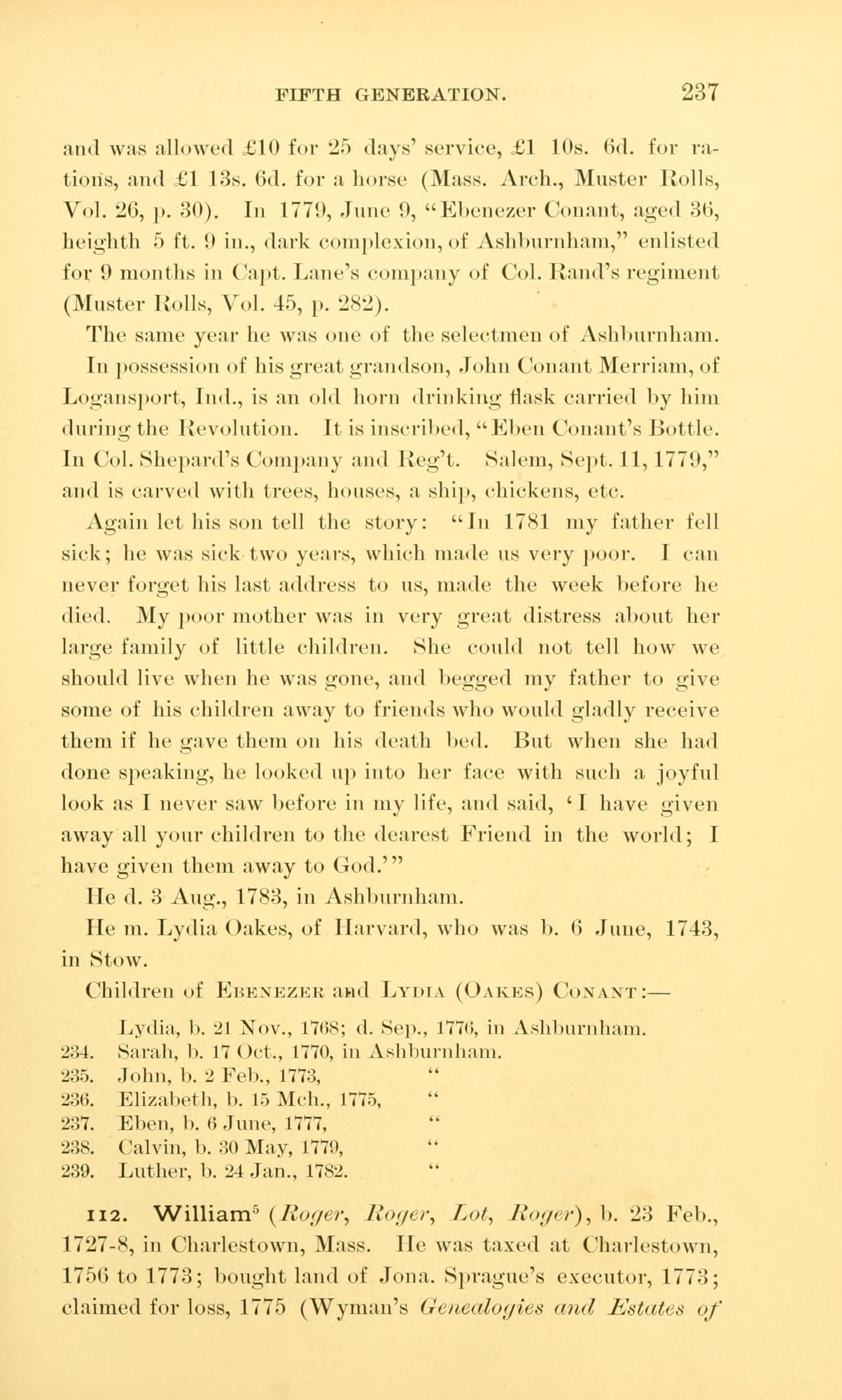
Source: Internet Archive (public-domain scan); historygenealogy00cona.
How it is shown: Complete page as scanned; no crop, no retouch.
Keep in mind: A printed book, not an original record.
Image details
Ashburnham's births (p. 22) enter John as "s. Ebenezer and Lydia, Feb. 2, 1773," among seven children, and the marriage intention of Ebenezer Conant Jr. and Lydia Oak is entered at Harvard and Ashburnham on November 29, 1766. Lydia's birth at Stow on June 6, 1743 is John's statement; the printed Stow records do not contain it, and their compilers note a defaced early volume.
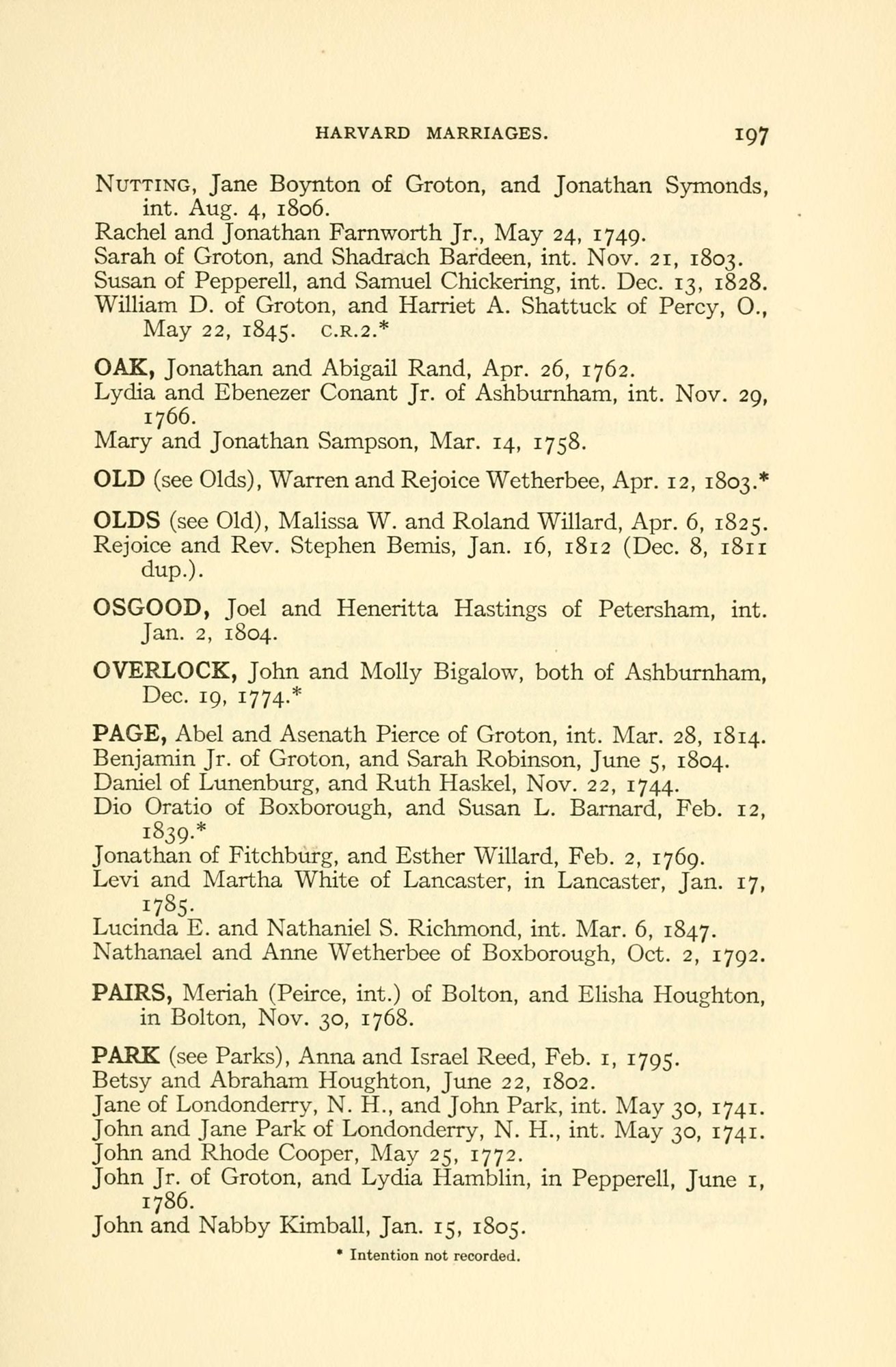
Source: Internet Archive (public-domain scan); vitalrecordsofha00harv.
How it is shown: Complete page as scanned; no crop, no retouch.
Keep in mind: A printed transcription of the town's record, not the manuscript.
Image details
The 1905 sketch and the 1906 register
The first long printed version of the family tradition appears in a sketch of Rensselaer Allston Oakes, by J. A. Ellis, in a history of Jefferson County, New York (1905, vol. I, pp. 144-145). It comes from a different branch of the family, the one through Seth and Nathaniel of Athens, Vermont. A cabin boy, "the only survivor of those on an English vessel wrecked on the Massachusetts coast," was bound out as a minor, killed a wildcat for the bounty and bought "a sheep or two." It closes: "These facts are found in his own account, handed down to his grandchildren, and written in the family Bible." The page carries the same genealogy, errors included, that the 1906 register later printed, and its paragraph on the family farm shares wording with the register's, including a farm "occupied" for forty years by Samuel McClure. That makes it another telling of the same note, not a separate source. The pages themselves are on the main story under "1905: the Jefferson County history."
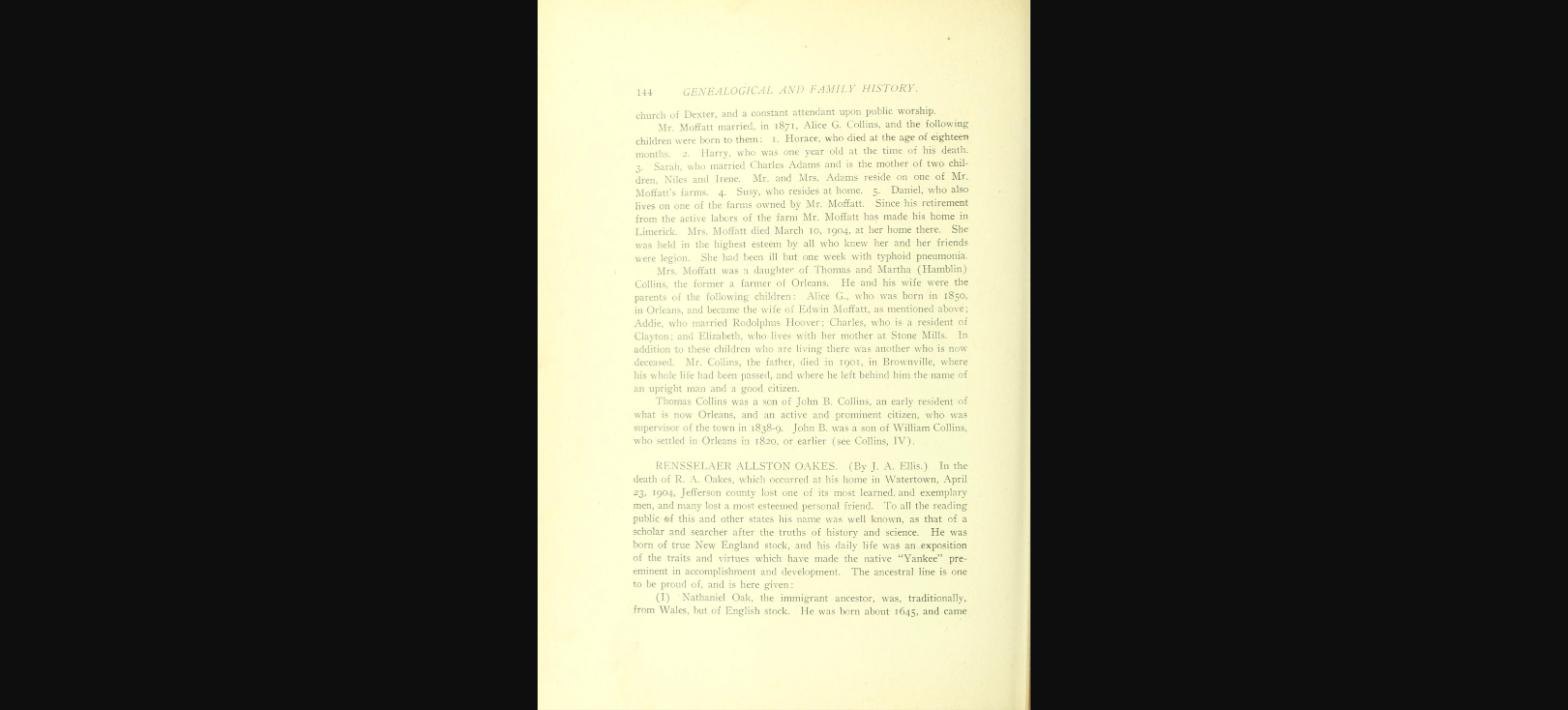
Source: Genealogical and Family History of the County of Jefferson, New York, vol. I (New York and Chicago: Lewis Publishing Co., 1905), pp. 144-145, archive.org item genealogicalfami01oake, leaf n195.
How it is shown: Complete image as saved; no crop, no retouch, no search highlight.
Keep in mind: A printed family history, third printed witness to the cabin-boy tradition; the traditional account is not proof.
Image details
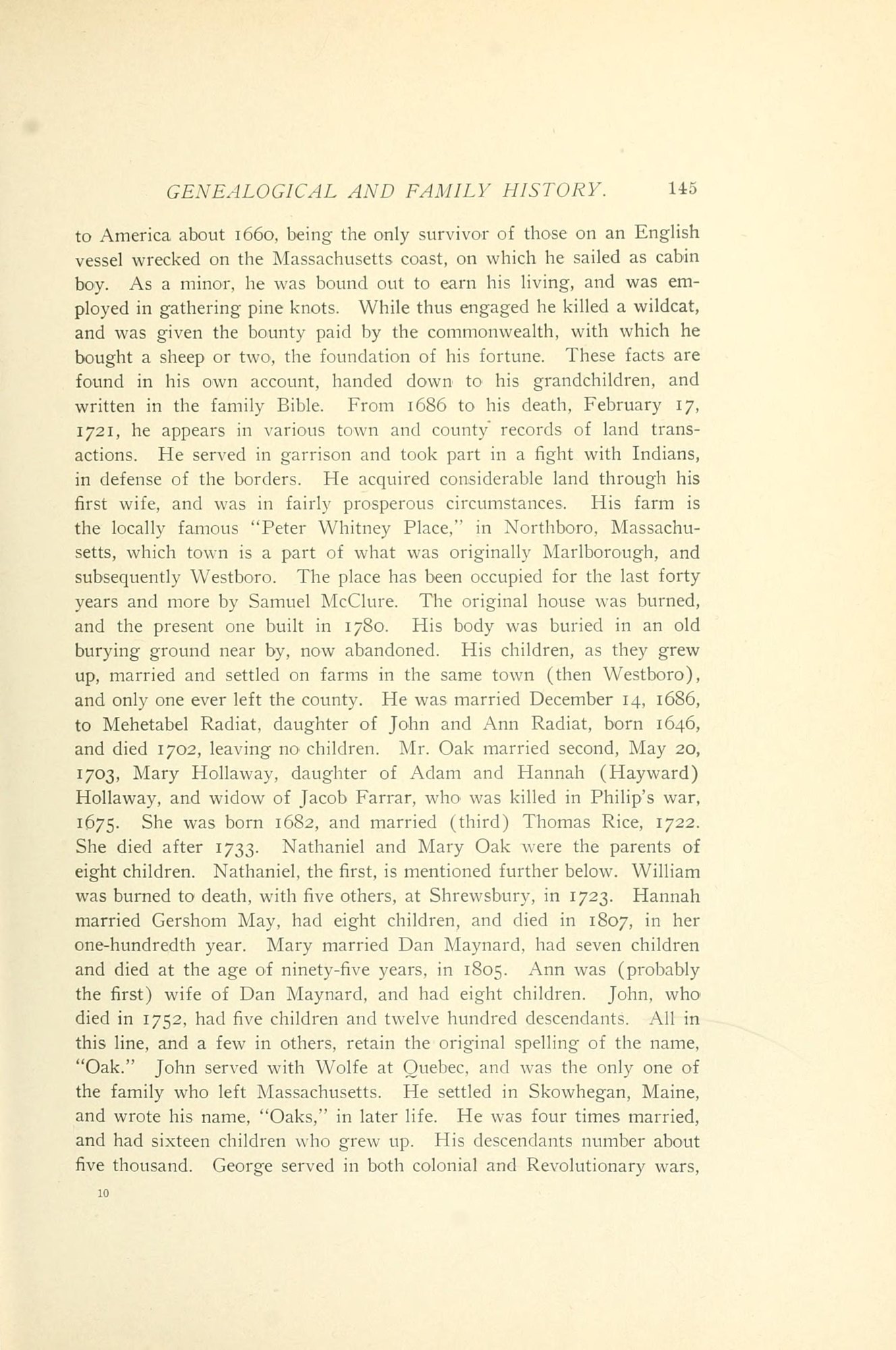
Source: Internet Archive (public-domain scan); genealogicalfami01oake.
How it is shown: Complete page as scanned; no crop, no retouch.
Keep in mind: A printed book, not an original record.
Image details
The man the sketch honors had a hand in the book itself: its title page says it was "compiled under the supervision of the late R. A. Oakes, custodian of the Jefferson County Historical Society," and its frontispiece is his portrait. The sketch traces his line from Seth through Seth's son Nathaniel of Athens, who married Susannah Evans about 1787, to their son Simeon, born at Athens on September 27, 1803. Simeon married Florilla Davis in 1823, moved to Mayville, New York, and in the late fall of 1836 to Rutland in Jefferson County, where with a store, an ashery, a grist mill and a cattle trade he became "the largest business man of his section"; he died on his South Rutland farm on October 1, 1862. Rensselaer Allston Oakes, Simeon and Florilla's youngest child, was born at Mayville on May 17, 1835. He studied at Black River Institute and Cazenovia Seminary and meant to enter the Universalist ministry, but married Myra Mooar of Hollis, New Hampshire, on September 11, 1855, and the next year opened a grocery on "The Square" in Watertown. He edited the Jefferson County Union in 1865-66 and the Watertown Post in 1873-74, kept a crockery store, and in 1876 retired to give "his attention wholly to research." He managed the Watertown Book Club for eighteen years, was corresponding secretary and custodian of the county historical society for the last ten years of his life, and published a volume of poems in 1859. His friend Orlo B. Rhodes of the Watertown Standard wrote the day after his death, April 23, 1904, that "he was as fond of flowers as he was of books." His only child, Robert Paul Oakes, was born at Watertown in 1857 (pages 146-149).

The register of 1906 calls the account a record "doubtless his own statement," "handed down to his grandchildren" and, by the son of one of them, John Conant, "inscribed in the family Bible." The words "doubtless his own statement" are the editor's inference. The account follows in full, ending, "The above account I have often heard my mother and my uncles relate." Of Nathaniel's origin the register says "we have only a vague tradition that he came from Wales," adds that "probably he was of English stock," and notes that an 1826 writer calls him English. It also records that in 1830 to 1840 some members of the family believed an "English fortune" awaited the heirs, and says they left "no record of the facts or theories on which their hopes rested." The register's own entry for Lydia (no. 22, p. 20) gives her marriage as November 29, 1766, with a second date, November 19, 1767, marked "Bible."
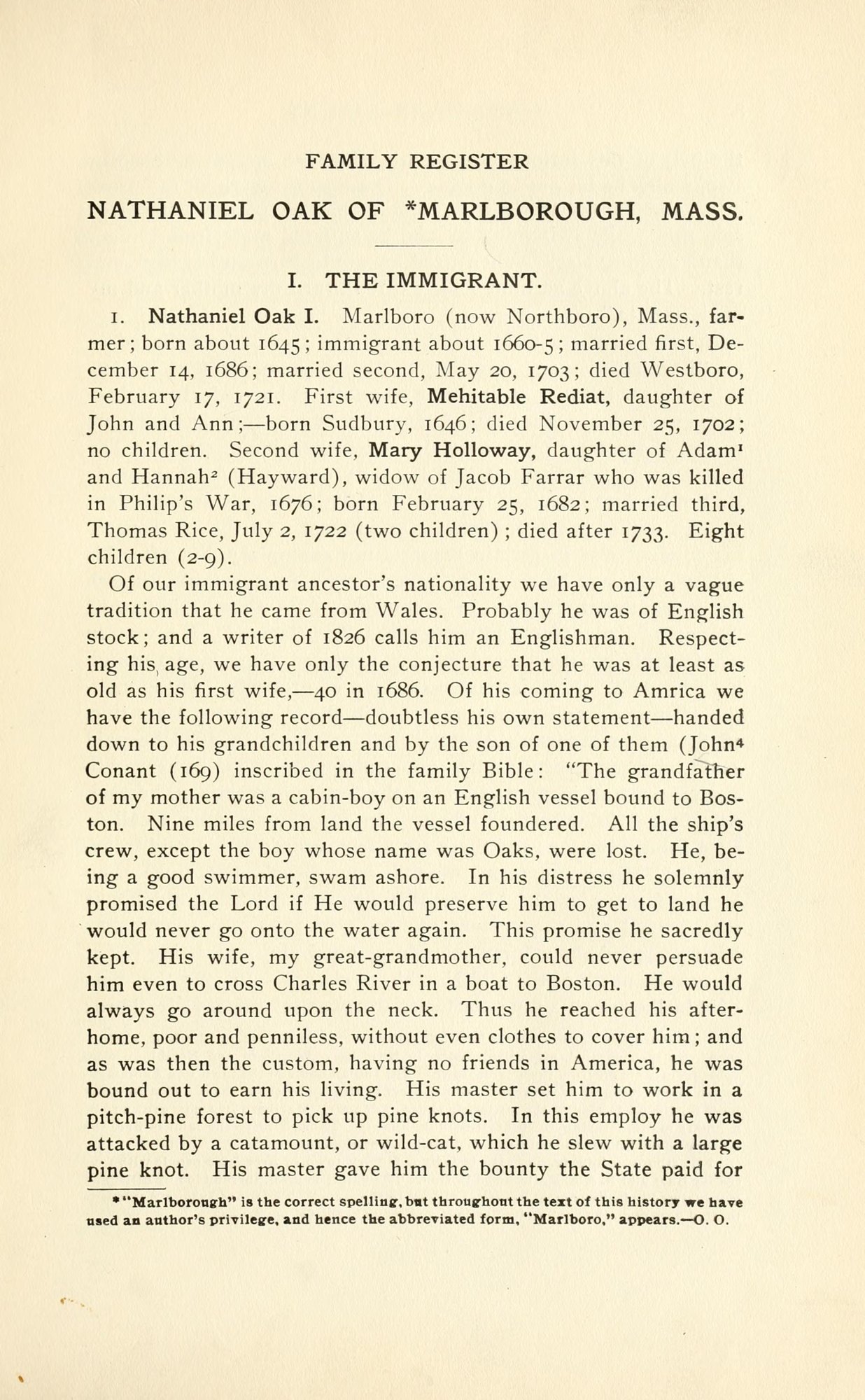
Source: Internet Archive (public-domain scan); oakoaksoakesfami00oakh.
How it is shown: Complete page as scanned; no crop, no retouch.
Keep in mind: A printed book, not an original record.
Image details
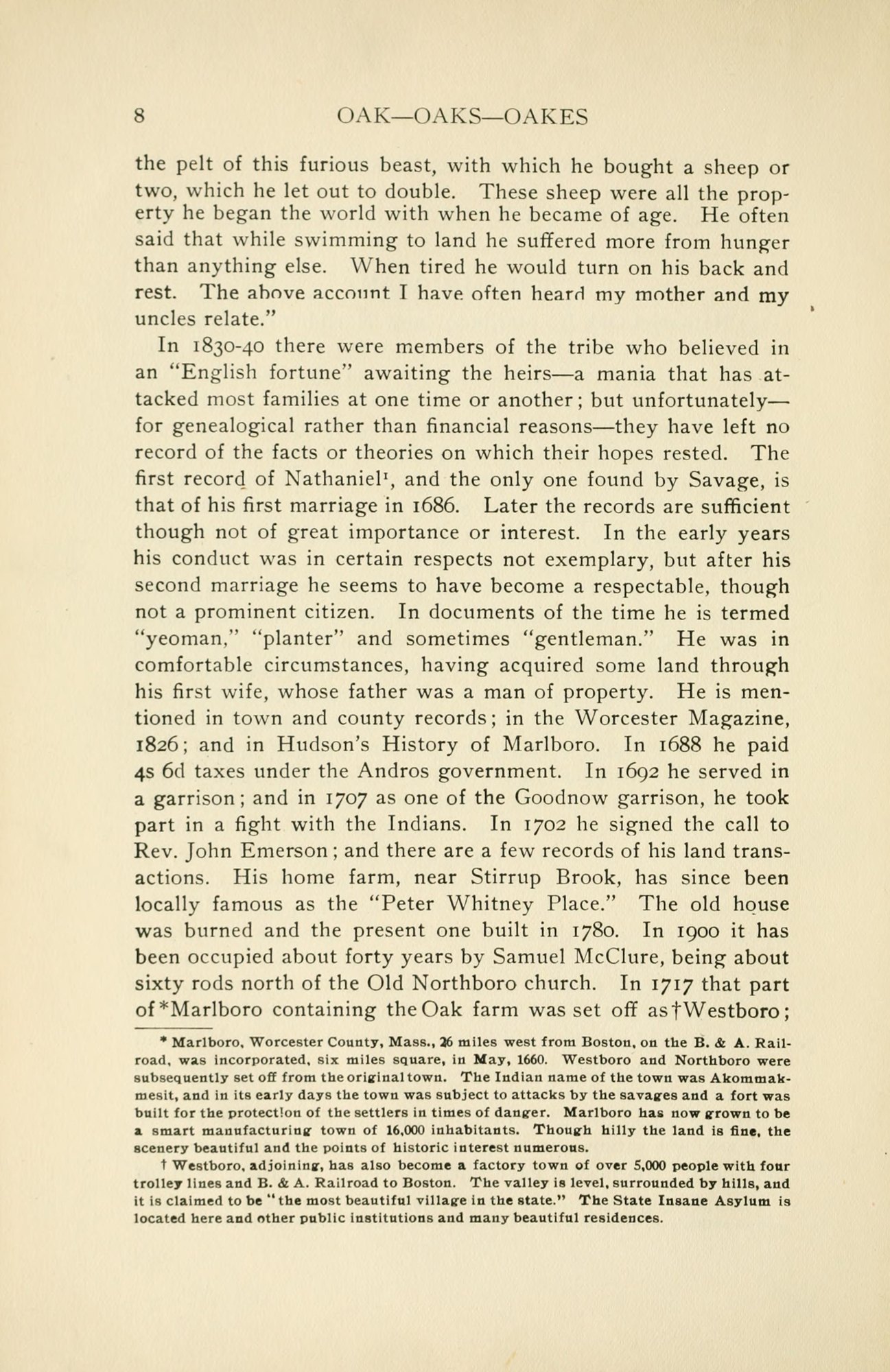
Source: Internet Archive (public-domain scan); oakoaksoakesfami00oakh.
How it is shown: Complete page as scanned; no crop, no retouch.
Keep in mind: A printed book, not an original record.
Image details
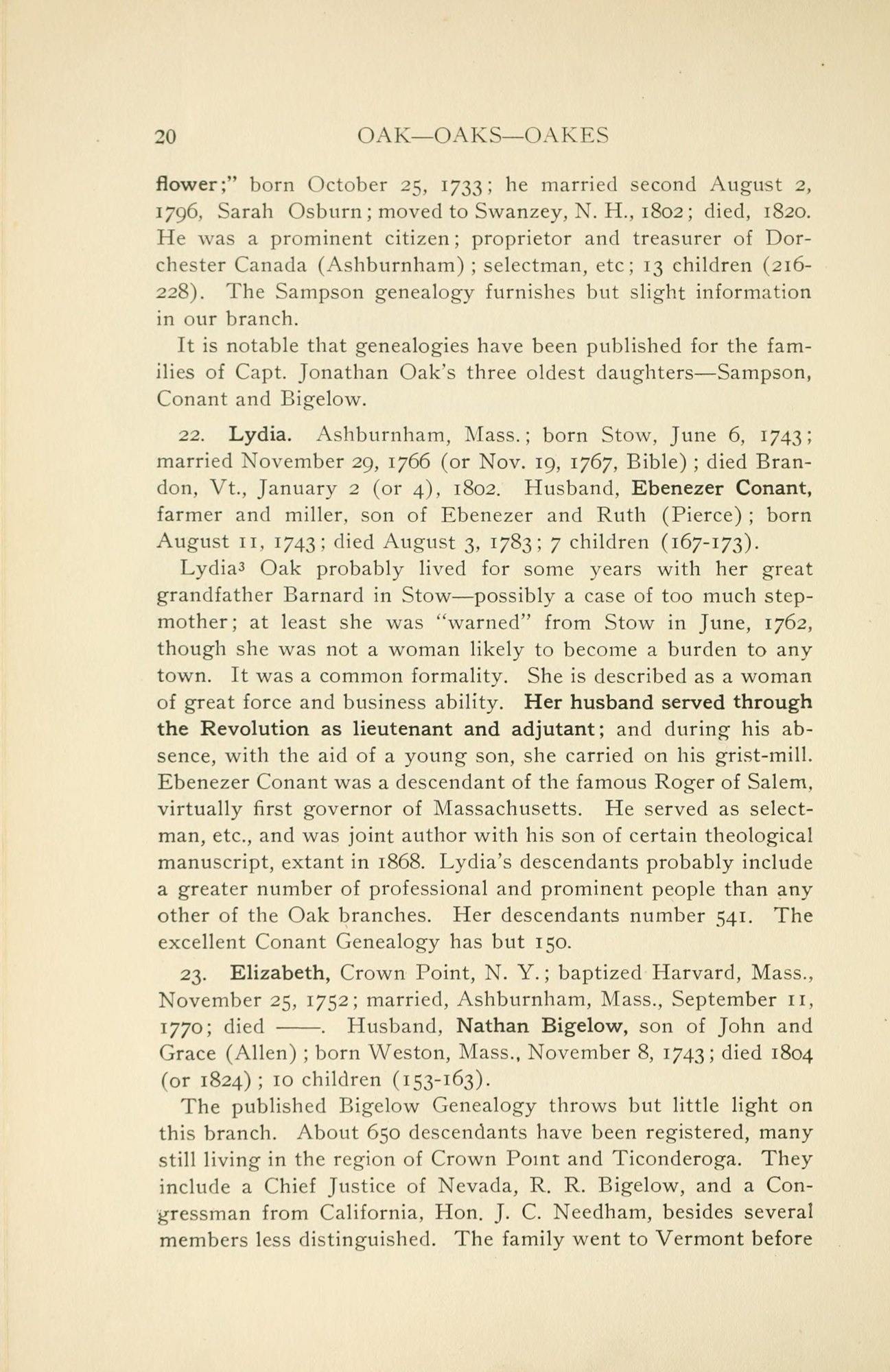
Source: Internet Archive (public-domain scan); oakoaksoakesfami00oakh.
How it is shown: Complete page as scanned; no crop, no retouch.
Keep in mind: A printed book, not an original record.
Image details
Later books repeat the register: Milliken (1911), Little (1909), Hart (1917), Porter and Gries (1919) and Oaks (1959). None prints the paragraphs about Captain Jonathan and Lydia that appear only in the typed copy below.
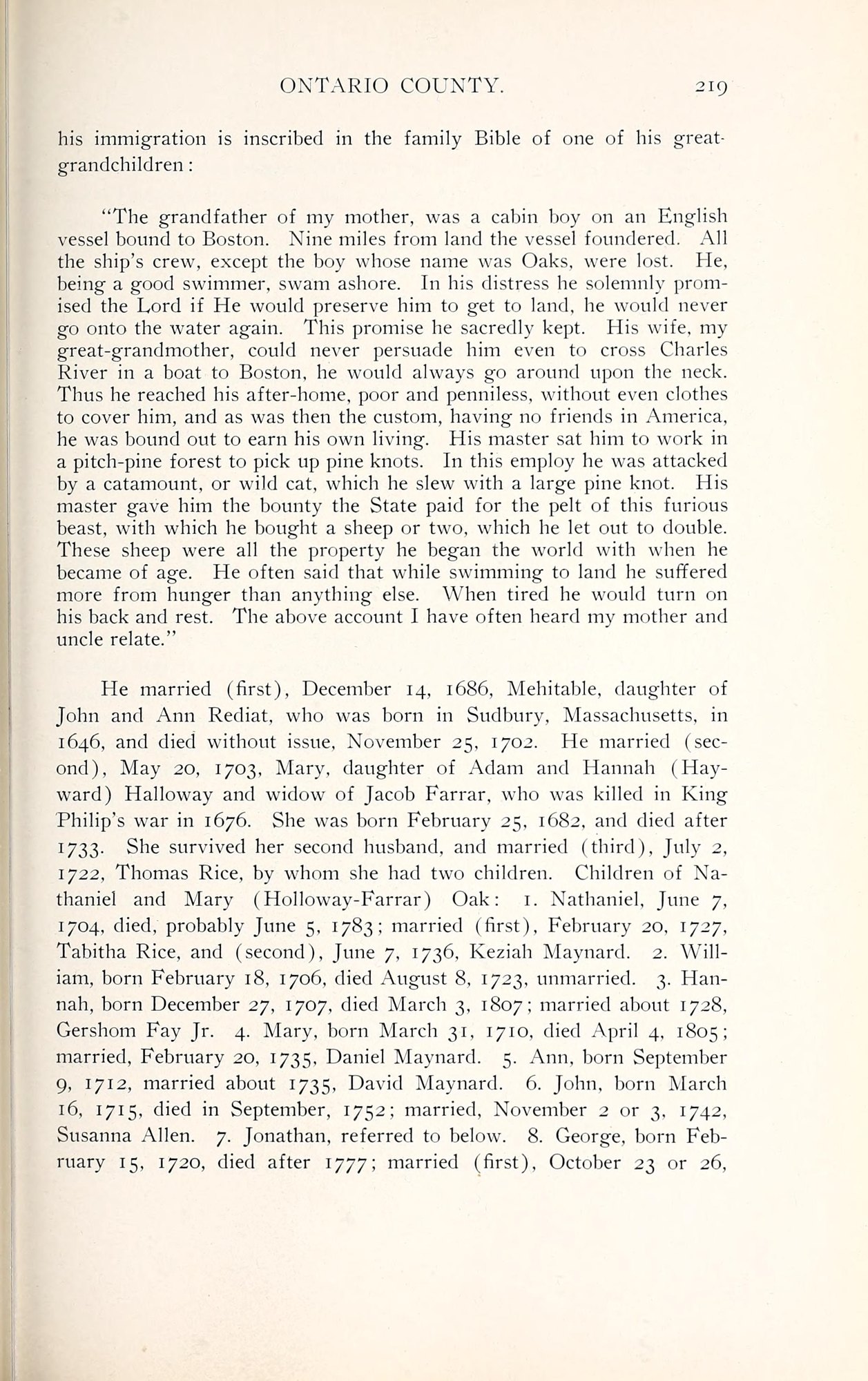
Source: Internet Archive (public-domain scan); historyofontario00mill_0.
How it is shown: Complete page as scanned; no crop, no retouch.
Keep in mind: A printed book, not an original record.
Image details
The typed copy
American Ancestors in Boston holds a typed copy of the note in a folder of loose papers in its Oak collection, Mss 865, box 9. It continues where the register stops. John Conant names the cabin boy's son as Captain Jonathan Oaks, a carpenter who "lost three wives in Stow, married a fourth and removed to the Kenebeck country, now in Maine." He names his mother, Lydia Oaks, his uncles John, Jonathan and Daniel, and two aunts who lived at Ashburnham. The copy ends with the statement that the note "was written in ink on blue writing-paper, and pasted into John Conant's family Bible." That differs from the register's "inscribed in the family Bible." Who typed the copy, and when, is not known, and the archive reports that the entry for Nathaniel in its own volume does not mention a Bible.
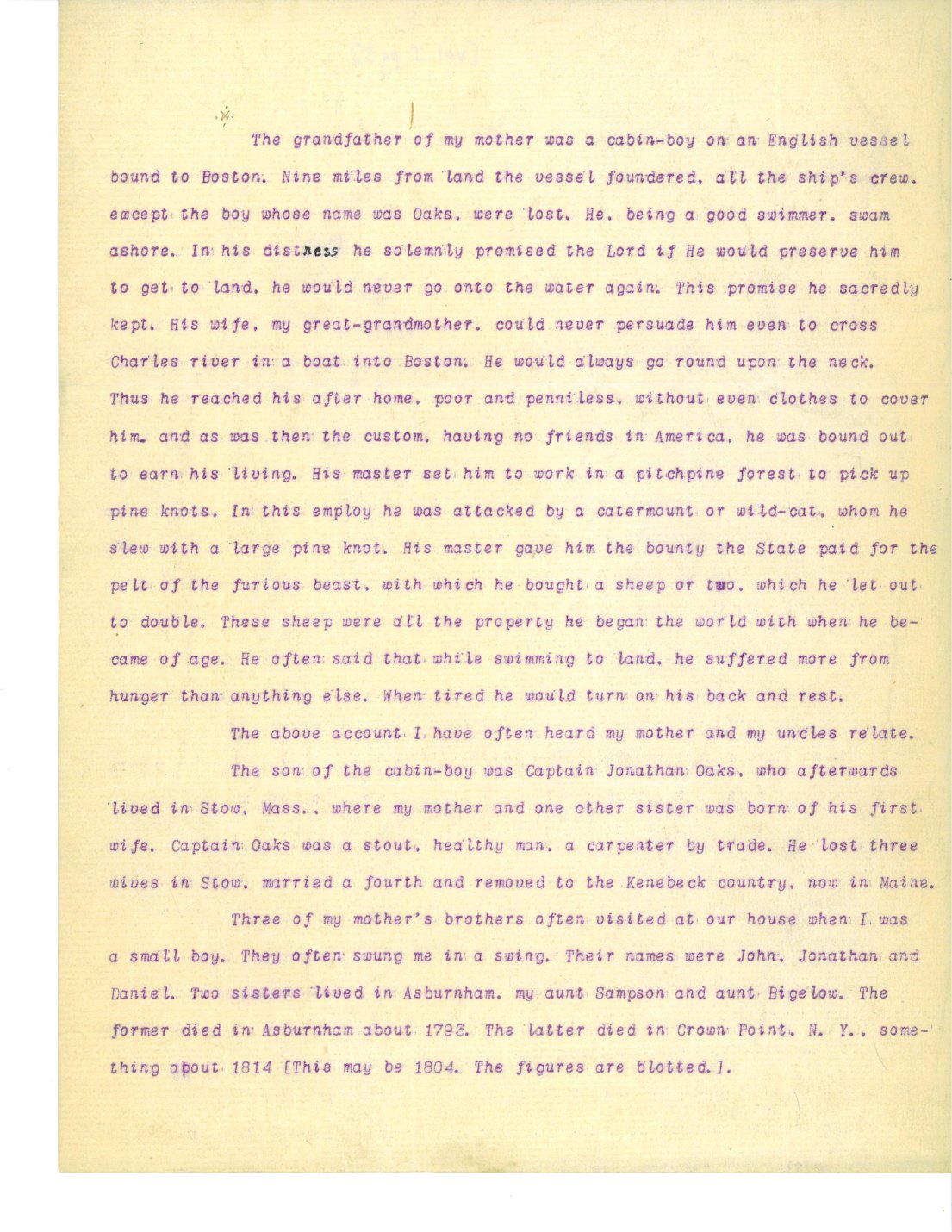
Source: Copy supplied by American Ancestors (NEHGS), Mss 865, Box 9, folder 2
How it is shown: Complete page as supplied; no crop, no retouch.
Keep in mind: A typed copy made by someone other than John Conant, who wrote the note; who typed it and when is not known. Family tradition.
Image details
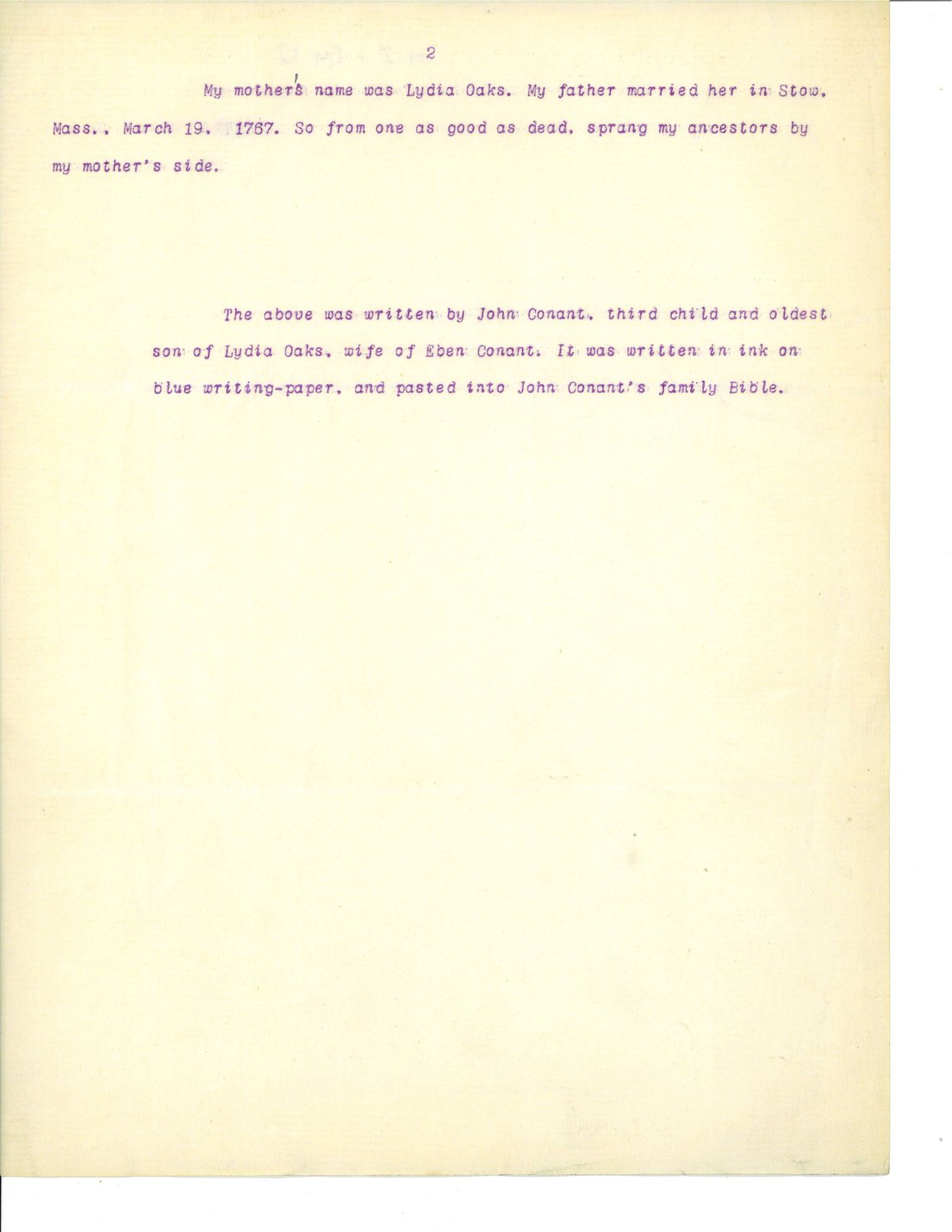
Source: Copy supplied by American Ancestors (NEHGS), Mss 865, Box 9, folder 2
How it is shown: Complete page as supplied; no crop, no retouch. Rotated upright from the sideways scan; nothing else changed.
Keep in mind: A typed copy made by someone other than John Conant, who wrote the note; who typed it and when is not known. Family tradition.
Image details
What the chain shows
The chain of family memory is short: Lydia Oaks, born at Stow in 1743, and her brothers told the story to her son John Conant, who wrote it down. Versions of his note reached the register, the Jefferson County history and the family typescript. The undated typescript preserves the family's account of how John Conant heard the story, through the line of Captain Jonathan Oaks, whose life the Massachusetts records match. Marlborough's records enter a Jonathan, son of Nathaniel and Mary, born August 21, 1717, and Joseph Allen's 1826 sketch of Northborough says of Nathaniel's son Jonathan that he "removed to Harvard"; Hudson repeats it in 1862. Hudson was repeating Allen, and neither cites a record. The captain at Harvard was probably that Jonathan. The 1899 Lewiston Journal feature says Captain Jonathan was born at Marlborough in 1717, settled at Harvard about 1750 and went to Skowhegan, Maine in 1772, and that his son John died at Exeter in 1842, suggesting that his Maine descendants also held the tradition.
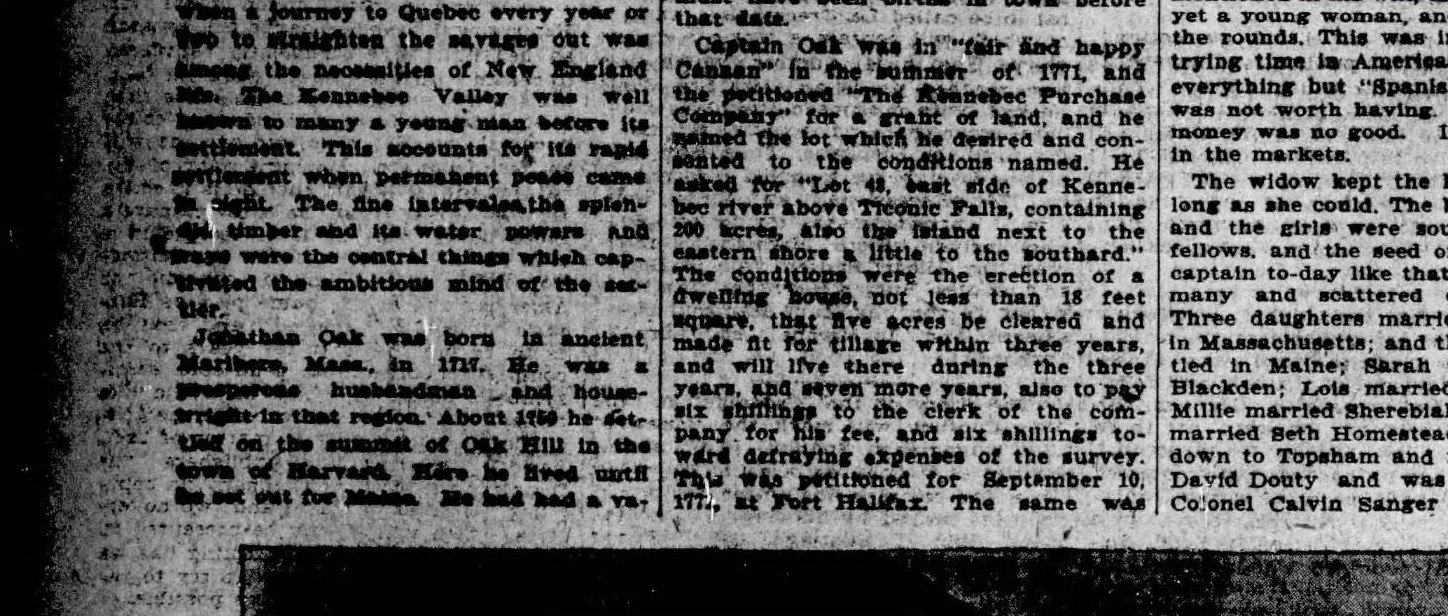
Source: Sun-Journal (Lewiston, Maine), 29 April 1899, via Newspapers.com (image 827989173).
How it is shown: Cropped to the document only: the viewer's toolbar, buttons, page counter and any account name are removed; no retouch of the document, no highlight. The saved original screenshot stays private.
Keep in mind: The writer calls the shipwreck-survivor, catamount and sheep account "tradition" and names no source. the year 1750 has a dark last digit and is read 1750; the left column is dark and damaged.
Image details
The note names the cabin boy only as "Oaks." The records confirm much of what it says about Captain Jonathan, and correct some of it: two of his wives died at Harvard, in 1750 and 1761, not at Stow. The records are set against the note on the main story under "Testing the story against Massachusetts records," and the captain's own life is told in Captain Jonathan Oaks: a carpenter from Marlborough to the Kennebec.
What is missing
- The family Bible, and the pasted note itself, have not been found. Exact-phrase searches in ArchiveGrid, Harvard's HOLLIS, Digital Commonwealth, and the Vermont Historical Society's Brigham index turned up nothing. The July 7, 1876 issue of the Black River Gazette of Ludlow, Vermont (the Brandon celebration report) has been only partly read (twelve of fourteen "Conant" hits on page 1, none relevant), so it is not yet ruled out.
- No mention of Conant, a Bible or the register was found in the descriptions of Henry L. Oak's papers at the Bancroft Library that were examined. His bound manuscript volumes went to the New England Historic Genealogical Society: Rev. Anson Titus's obituary of Oak in the Register (January 1906, p. 114) says the manuscript, "if not published, will be deposited in the Library of this Society," and a Dartmouth class memorial (April 1906) speaks of "four bound volumes." That is the collection above, but no covering letter or note on who typed the Conant copy has been found.
- The Conant manuscript volume of 1782 has not been seen.
- No account of the story earlier than the April 1899 Lewiston Journal feature has been found, and no account from an independent family containing the whole sequence of shipwreck, vow, indenture, wildcat and sheep has been found in the sources searched.
The full account of Nathaniel and the records behind it is on Nathaniel Oak and the cabin-boy story, and the searches made for the story are summarized on the research log.
Sources
- Lewiston Journal (Lewiston, Me.), Illustrated Magazine Section, April 29, 1899, p. 20, "On Maine's Historic Ground." www.newspapers.com/image/827989173/
- Vermont Phoenix (Brattleboro), January 26, 1900, p. 2, "Some Early Settlers of Several Windham County Towns." www.newspapers.com/image/64161766/
- Allen, history of Northborough, in the Worcester Magazine (1826), p. 152. archive.org/details/worcestermagazi00unkngoog/page/n159/mode/1up; Charles Hudson, History of the Town of Marlborough (1862), p. 426. archive.org/details/historyoftownofm00huds/page/n445/mode/1up
- H. L. Oak, "The Oaks of Garland," in Biographical Sketches of Representative Citizens of the State of Maine (1903), pp. 193-195. archive.org/details/biographicalsket00newe/page/n440/mode/1up
- J. A. Ellis, sketch of Rensselaer Allston Oakes, in Genealogical and Family History of the County of Jefferson, New York, vol. I (Lewis Publishing, 1905), pp. 144-149, with the title page and frontispiece portrait, read on the page images. archive.org/details/genealogicalfami01oake
- H. L. Oak, Oak-Oaks-Oakes: Family Register (1906), pp. 7-8 and 20. Public domain; read the whole book: PDF, from the Internet Archive.
- American Ancestors (New England Historic Genealogical Society), Mss 865, box 9: typed copy of a note by John Conant.
- Robert Collyer, A Man in Earnest: Life of A. H. Conant (1868; the page images shown are from the 1872 edition), pp. 9-11; Frederick Odell Conant, A History and Genealogy of the Conant Family (1887), pp. 236-237 and 297.
- Vital Records of Harvard, p. 197 (marriage intention of Ebenezer Conant Jr. and Lydia Oak, November 29, 1766).
- Later books that copy the register: Milliken (1911), Little (1909), Hart (1917), Porter and Gries (1919), Oaks (1959).